

Scout's Take
2 picks worth buying
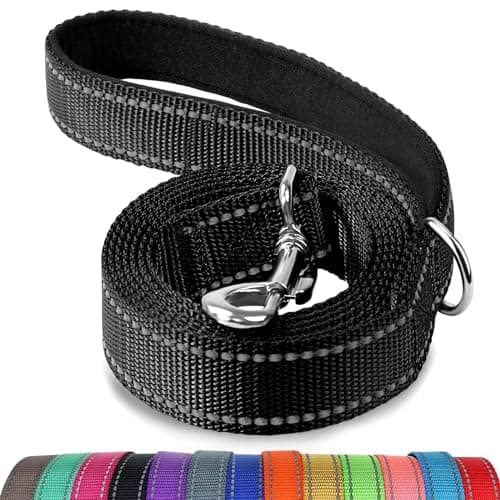
Joytale Dog Leash, 6 FT Double-Sided Reflective, Padded Handle Nylon Heavy Duty Leashes for Medium & Large Dogs Walking, Black
The best all-around choice for everyday walking, training, and safety.
- Reflective stitching improves low-light visibility
- Padded handle boosts comfort and control
- Not chew-proof
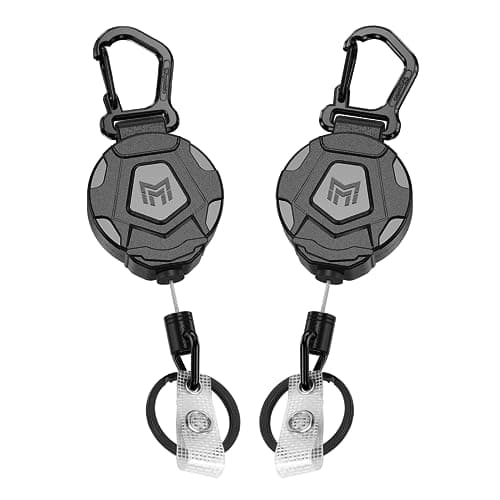
MNGARISTA 2-Pack Retractable Keychain, Heavy Duty Carabiner Badge Holder, Tactical ID Badge Reel Key Chain with 31.5” Steel Retractable Cord, 8.0 oz
A retractable-style product, but not a practical substitute for a dog leash.
- Retractable cord offers more reach
- Heavy-duty build and spring retraction
- Not a dog leash
- Limited relevance to pet walking
Who this is for: Best for dog owners who want safer everyday walks, better training control, and a simple leash choice.
Retractable vs Standard Dog Leash (2026): Which Should You Actually Buy?
At a Glance
| Category | Retractable dog leash | Standard dog leash |
|---|---|---|
| Best for | Sniff-heavy walks in open, low-traffic areas | Training, city walks, crowded spaces, and everyday control |
| Control | Less precise; line length changes constantly | High; fixed length keeps your dog close and predictable |
| Safety | Higher risk of entanglement, burns, and sudden line lock issues | Generally safer and easier to manage |
| Training use | Not ideal for loose-leash training | Better for teaching leash manners |
| Price | Typically higher, with more moving parts | Usually cheaper and simpler |
| Winner | Best for freedom | Best overall |
Design
Winner: standard dog leash
A standard leash keeps the walking setup simple: one fixed line, one clip, one clear distance. That simplicity is a big reason trainers and safety-focused reviewers often prefer it, especially in busy neighborhoods or around distractions.
Retractable leashes, by contrast, add a housing, spool, lock button, and a thin cord or tape that extends and retracts. That design can feel convenient, but it also creates more failure points and more chances for a dog to get farther away than you intended.
Performance
Winner: standard dog leash
For real-world control, the standard leash performs better. It helps you guide turns, keep heel position, and react quickly if another dog, cyclist, or pedestrian appears. Independent expert guidance on leash safety consistently favors predictable restraint for everyday walks.
Retractable leashes can be useful in open spaces when you want to give a dog more room to sniff, but that extra range can work against you in high-traffic areas. Owner feedback often praises the freedom, while also mentioning sudden tangles, lock hesitation, and less control when dogs lunge.
Safety
Winner: standard dog leash
Safety is the clearest advantage for the standard leash. A fixed-length lead reduces the chance of the line wrapping around legs, snagging objects, or extending into unsafe distances near roads or dogs you don’t know.
Retractable models can also contribute to rope-burn style injuries if the cord runs through a hand or around skin during a sudden pull. That risk is one reason many veterinarians and trainers caution against them for strong pullers or reactive dogs.
Training
Winner: standard dog leash
If your goal is better leash manners, the standard leash is the stronger tool. Loose-leash training works best when your dog learns that forward movement depends on your cues, and a fixed leash makes that communication much clearer.
Retractable leashes can unintentionally reward pulling by allowing the dog to keep moving when tension increases. That makes them a poor fit for puppies learning basics, dogs that lunge, or anyone working on consistent heel behavior.
Comfort and Convenience
Winner: retractable dog leash
Retractable leashes win on convenience in the right setting. If you walk in parks, open trails, or low-traffic areas and want your dog to roam a bit more while still staying attached, the adjustable distance can feel more natural.
That said, convenience comes with tradeoffs. Standard leashes are easier to grab, faster to clip, and simpler to store. For many owners, the “set it and forget it” nature of a 6-foot leash ends up being more convenient overall.
Value
Winner: standard dog leash
Standard leashes usually cost less and last longer because there are fewer moving parts. They’re also easier to replace, and the best ones often use durable nylon webbing, reflective stitching, and padded handles without adding much to the price.
Retractable leashes may seem worth it if you want one tool for multiple environments, but the extra mechanism can wear out over time. If you’re comparing long-term value, the simpler product usually wins.
Battery/Durability
Winner: standard dog leash
There’s no battery in either option, but durability still matters. A standard leash is generally more reliable because it doesn’t depend on a spring, lock mechanism, or internal spool to function properly.
For example, a product like Joytale Dog Leash, 6 FT Double-Sided Reflective, Padded Handle Nylon Heavy Duty Leashes for Medium & Large Dogs Walking, Black highlights the kinds of features that make fixed leashes strong in daily use: reflective stitching, padded grip, and heavy-duty nylon webbing. By comparison, retractable systems are more mechanically complex, which can matter over time.
Retractable Dog Leash Is the Better Choice If…
- You walk mostly in open parks, fields, or low-traffic areas.
- Your dog is calm, responsive, and not a strong puller.
- You want to give your dog more sniffing freedom without unclipping.
- You understand the safety tradeoffs and use the lock carefully.
Standard Dog Leash Is the Better Choice If…
- You walk in neighborhoods, cities, or crowded public spaces.
- You’re training a puppy or working on loose-leash manners.
- Your dog pulls, lunges, or reacts to other dogs and people.
- You want the safest, simplest, most budget-friendly option.
Our Final Verdict
Standard dog leash wins. If you’re deciding between retractable vs standard dog leash, the fixed-length option is the better buy for most people because it offers more control, better safety, easier training, and stronger long-term value. Retractable leashes have a place for calm dogs in open areas, but they’re more specialized than most buyers expect.
If you want a dependable everyday leash, the standard style is the smarter default. If you want more range for occasional park walks and you’re comfortable managing the added risk, retractable can still make sense.
Frequently Asked Questions
Is a retractable dog leash bad for training?
Usually, yes. Trainers often prefer a fixed-length leash because it gives clearer feedback and helps prevent pulling from being rewarded with more slack.
Are standard dog leashes safer than retractable leashes?
In most everyday situations, yes. Standard leashes are easier to control, less likely to tangle, and reduce the chance of sudden line-related injuries.
When is a retractable leash okay to use?
It can be reasonable for calm, well-trained dogs in open spaces like parks or trails where extra roaming room is less risky.
What length is best for a standard dog leash?
A 6-foot leash is the most common all-around choice because it balances control and freedom well for walks in neighborhoods and public spaces.
Which leash is better for a dog that pulls?
A standard leash is the better choice. It gives you more immediate control and works better with loose-leash training methods.
Frequently asked questions
Is a retractable dog leash bad for training?
Usually, yes. Trainers often prefer a fixed-length leash because it gives clearer feedback and helps prevent pulling from being rewarded with more slack.
Are standard dog leashes safer than retractable leashes?
In most everyday situations, yes. Standard leashes are easier to control, less likely to tangle, and reduce the chance of sudden line-related injuries.
When is a retractable leash okay to use?
It can be reasonable for calm, well-trained dogs in open spaces like parks or trails where extra roaming room is less risky.
What length is best for a standard dog leash?
A 6-foot leash is the most common all-around choice because it balances control and freedom well for walks in neighborhoods and public spaces.
Which leash is better for a dog that pulls?
A standard leash is the better choice. It gives you more immediate control and works better with loose-leash training methods.
Score breakdown
- value
- 9.0
- usability
- 8.0
- durability
- 9.0
- performance
- 9.0
- buyerFeedback
- 9.0

How Scout Picks
Specs & standards
We start from manufacturer specs and category standards.
Expert tests
We weigh independent expert and lab test results.
Verified owner reviews
We read patterns across thousands of real owners.
Scout is our illustrated guide — we research from specs, independent expert tests, and thousands of verified owner reviews. We don't lab-test products ourselves.
How we pick →Get the Full Pet Gear Buyer's Guide
Join our free newsletter — we'll send our latest Pet Gear picks, specs and verdicts straight to your inbox.
Free. No spam. Unsubscribe anytime.
Was this review helpful?
Be the first to share your feedback on this review.
Sign in to vote and let us know what you think.
Discussion (0)
No comments yet. Be the first to start the discussion.
Related Reviews
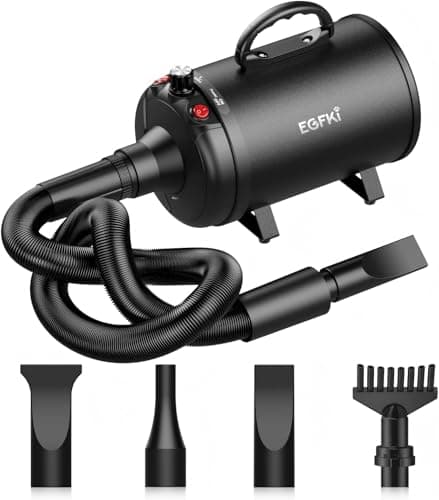
How to Choose the Best Professional Pet Dryer in 2026: Complete Buying Guide
If bath time leaves your dog damp for hours, your bathroom covered in fur, or your pup stressed by loud noise, choosing the right dryer can fix all three problems. The biggest mistake buyers make is shopping by wattage alone instead of matching airflow, noise, heat control, and nozzle options to the
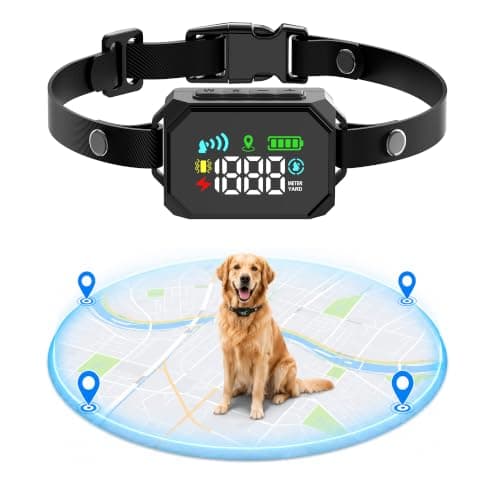
How to Choose the Best Wireless Dog Fence for Large Yards in 2026: Complete Buying Guide
If you’re trying to figure out how to choose a wireless dog fence for large yards , the hardest part is usually not the setup — it’s picking a system that can actually cover your property without constant boundary drift, weak signals, or frustrating false corrections. The most common mistake buyers
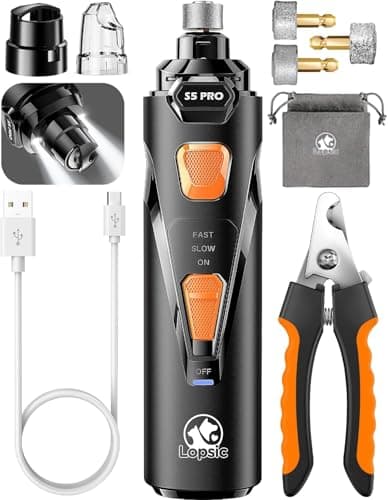
8 Best Electric Dog Nail Grinders for Anxious Dogs in 2026 — Quiet, Low-Stress Grooming Picks
If your dog panics at nail trims, the right grinder can make a huge difference: less noise, less vibration, and more control. The best electric dog nail grinders for anxious dogs prioritize whisper-quiet motors, visible grinding zones, and adjustable speeds so you can work slowly and safely. Below,