


Scout's Take
3 picks worth buying
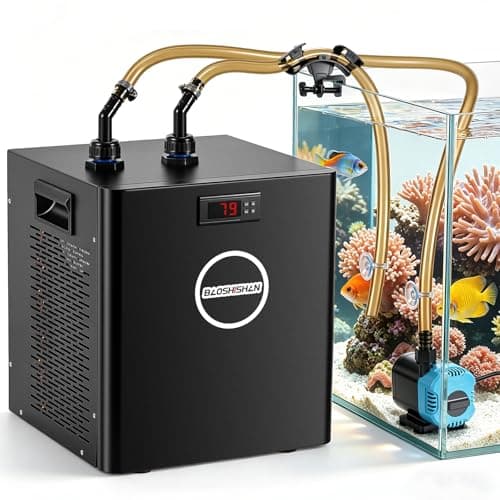
BAOSHISHAN 1/3 HP Aquarium Chiller Up to 79 Gal, Drops Down 8-15F 110V | Rapid Cooling, Ultra-Quiet Compressor, Complete Kit w/Pump & Hose, Ideal For Indoor Hydroponic, Axolotl and Coral Reef Tank
The best all-around balance of cooling, noise control, and setup convenience.
- Complete kit with pump and hose
- Quiet operation and titanium evaporator
- Needs good ventilation
- Capacity depends on room temperature
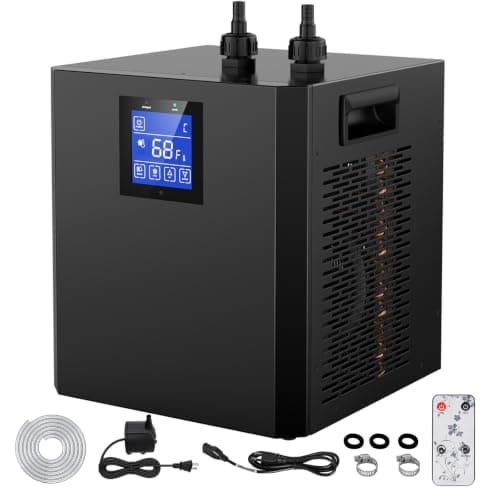
Fitnet 79 Gal Aquarium Chiller, 1/3 HP Fish Tank Water Chiller, Hydroponic Water Chiller with Touch Screen, Hydroponics System Axolotl Jellyfish Coral Reef 300L
A strong entry-level pick for buyers who want useful controls and steady cooling.
- Digital touch screen with memory function
- Efficient compressor cooling
- Needs space for heat dissipation
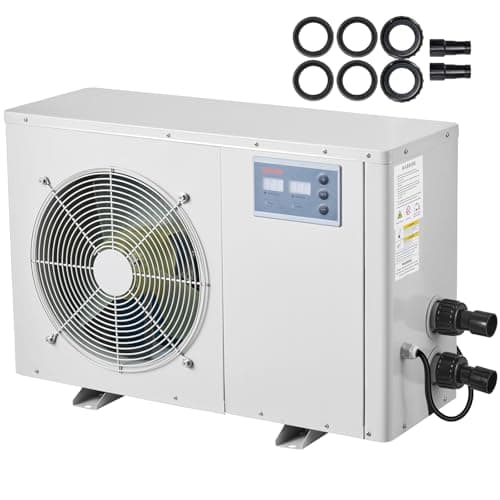
VEVOR Aquarium Chiller 150Gal 1/2HP Quiet Cooler with Titanium Evaporator
Best suited to larger systems that need more cooling headroom.
- Higher-capacity 1/2 HP cooling
- Titanium evaporator for freshwater and saltwater
- Takes more space
- Still sensitive to ambient heat
Who this is for: Best for aquarium owners who need reliable cooling for sensitive livestock and want to match a chiller to tank size, room heat, and setup type.
How to Choose the Best Aquarium Chiller in 2026: Complete Buying Guide
If your tank keeps drifting too warm, your livestock can get stressed fast—and in sensitive setups like axolotls, coral reefs, and hydroponic systems, that can become a real problem. The biggest mistake buyers make when researching how to choose an aquarium chiller is focusing on horsepower alone instead of matching cooling capacity, flow needs, and room conditions to the actual tank setup. This guide breaks down the features that matter most, the red flags to avoid, and the best researched options to consider based on manufacturer specs, independent expert coverage, and verified owner feedback.
Key Features to Look For
1) Cooling capacity that matches your tank volume
The first thing to check is whether the chiller is rated for your aquarium size under realistic conditions. Manufacturer tank ratings are helpful, but they assume a certain ambient temperature, water load, and ventilation setup. For best results, choose a model that gives you some headroom rather than one that is barely adequate, especially if your room runs warm.
2) Stable temperature control
Look for a unit with precise thermostat control and memory settings. A chiller that can hold a consistent range matters more than one that cools aggressively but overshoots. Stable temperature is especially important for axolotls, coral, and other temperature-sensitive species that do poorly with swings.
3) Compressor quality and refrigerant type
Most serious aquarium chillers use compressor-based cooling, which is far more effective than fan-only cooling for true temperature reduction. Specs like high-efficiency compressors and modern refrigerants can improve cooling performance and energy use. In practice, compressor quality often determines whether the unit can keep up during summer heat.
4) Heat dissipation and airflow requirements
Chillers need room to breathe. Many manufacturers recommend several inches of clearance around the unit so the fans can exhaust heat properly. If you place a chiller in a tight cabinet or cramped stand, performance can drop and the compressor may work harder than it should.
5) Noise level for indoor placement
If the chiller will sit in a living room, bedroom, office, or near a display tank, noise matters. Some compressors and fans are noticeably quieter than others, and verified owner feedback is especially useful here. A quieter unit is less disruptive and more likely to be tolerated long term.
6) Corrosion-resistant materials
For saltwater, reef, and mixed-use systems, titanium evaporators and corrosion-resistant housings are major advantages. These materials help protect the heat exchanger from long-term wear and make the chiller more suitable for marine environments. If you run freshwater only, this is still a plus—but it becomes much more important for saltwater.
7) Installation kit and hose compatibility
Some chillers are essentially plug-and-play, while others require you to source pumps, tubing, and clamps separately. A complete kit can save setup time and reduce compatibility mistakes. Check hose sizes, included pump specs, and whether the unit is designed for your circulation style before buying.
What to Avoid
Not every aquarium chiller that looks powerful on paper will work well in real life. Here are the most common pitfalls to avoid when learning how to choose an aquarium chiller:
- Buying by horsepower alone. HP is only one part of the equation. Tank size, room heat, water volume, and airflow all affect real-world performance.
- Ignoring ambient room temperature. A chiller that works fine in a cool basement may struggle in a warm room or during summer heat.
- Choosing a unit with no ventilation plan. Poor airflow can reduce cooling efficiency and shorten compressor life.
- Overlooking pump and tubing requirements. Some models need specific flow rates or compatible hose sizes to work properly.
- Assuming quieter means silent. Compressor chillers still make some noise and vibration, so placement matters.
- Using an undersized chiller for sensitive livestock. If your animals need tight temperature control, a borderline unit can lead to stressful swings.
- Skipping material checks for marine use. Non-corrosion-resistant components are a bad fit for saltwater systems.
Our Top Picks
Best Overall: BAOSHISHAN 1/3 HP Aquarium Chiller Up to 79 Gal, Drops Down 8-15F 110V | Rapid Cooling, Ultra-Quiet Compressor, Complete Kit w/Pump & Hose, Ideal For Indoor Hydroponic, Axolotl and Coral Reef Tank
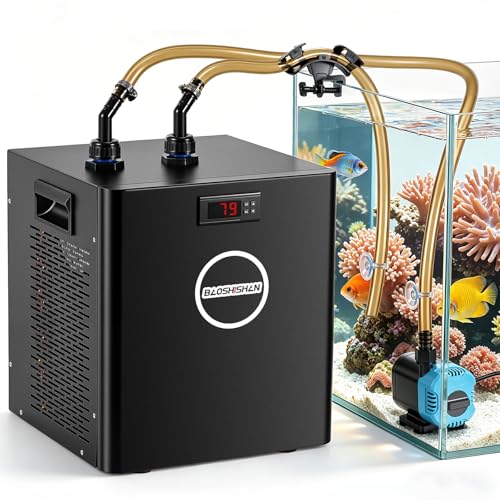

This is the strongest all-around pick for buyers who want a balanced mix of cooling performance, noise control, and setup convenience. The included pump, tubing, and clamps make it especially appealing if you want fewer compatibility headaches, while the titanium evaporator and quiet compressor help it fit a wider range of freshwater and marine applications.
- ✓ Precise temperature control with 1/3 HP refrigeration compressor
- ✓ Quiet indoor operation rated around 45-50dB at 1 meter
- ✓ Pure titanium evaporator for corrosion resistance
- ✓ Complete kit with pump, tubing, and hose clamps
- ✗ Rated capacity can be reduced by hot rooms or peak summer conditions
- ✗ Requires proper clearance for airflow to maintain performance
Best Budget: Fitnet 79 Gal Aquarium Chiller, 1/3 HP Fish Tank Water Chiller, Hydroponic Water Chiller with Touch Screen, Hydroponics System Axolotl Jellyfish Coral Reef 300L

The Fitnet is a practical choice for buyers who want a feature-rich entry point without moving into a more premium setup. Its digital touch screen, memory function, and titanium pump make it appealing for hobbyists who want simple temperature control and reliable day-to-day operation.
- ✓ Efficient compressor with automatic constant temperature control
- ✓ Digital touch screen with memory function after power loss
- ✓ Pure titanium pump for heat exchange and corrosion resistance
- ✓ Designed for aquariums, hydroponics, axolotls, and coral reef setups
- ✗ Cooling performance depends heavily on water volume and room temperature
- ✗ Needs generous spacing for heat dissipation
Best for Larger Tanks: VEVOR Aquarium Chiller 150Gal 1/2HP Quiet Cooler with Titanium Evaporator


If you need more capacity for a larger system, this VEVOR model stands out for its higher tank rating and strong circulation rate. It is a good fit for users who want a more powerful chiller for bigger aquariums, aquaponic systems, or marine setups where stable temperature control matters.
- ✓ 1/2 HP high-efficiency cooling for larger systems
- ✓ Wide temperature range and strong circulation rate
- ✓ Titanium evaporator suitable for freshwater and saltwater
- ✓ Designed for multiple use cases beyond standard aquariums
- ✗ Larger capacity can mean more attention to installation and space
- ✗ Performance still depends on room temperature and water volume
Budget Guide: What You Get at Each Tier
Budget tier
Budget aquarium chillers usually focus on the essentials: a compressor-based cooling system, a digital thermostat, and a modest tank rating that can work well when your room temperature is controlled. You can expect simpler construction and fewer extras, but a good budget model can still be a strong choice for smaller tanks or hobbyists who need dependable cooling without advanced features. The tradeoff is that you may need to be more careful about ventilation, water volume, and ambient heat.
Mid-range tier
Mid-range models often add a better balance of cooling performance, quieter operation, and more thoughtful accessories. This is where you’re more likely to see complete kits, better noise control, and stronger materials like titanium evaporators. For most buyers, this tier offers the best mix of convenience and long-term usability, especially if the chiller will run indoors near living spaces.
Premium tier
Premium chillers are usually built for larger systems or more demanding temperature control. Expect stronger cooling capacity, higher circulation rates, and more robust components designed for freshwater and saltwater use. These models make the most sense when you need extra headroom, such as for large aquariums, reef systems, or setups in warm rooms where a smaller unit might struggle.
Frequently Asked Questions
How do I know what size aquarium chiller I need?
Start with your tank volume, then factor in room temperature, lighting heat, livestock sensitivity, and whether the chiller will be running in a closed stand or open area. Choose a unit with some extra capacity rather than one that is only barely rated for your setup.
Is a 1/3 HP aquarium chiller enough for my tank?
It can be enough for many mid-size setups, but the real answer depends on ambient temperature and how much heat your system produces. A 1/3 HP unit is often a practical choice for moderate tanks, while larger or warmer setups may need more capacity.
Do aquarium chillers work for saltwater tanks?
Yes, but saltwater use makes corrosion resistance much more important. Look for titanium evaporators and materials specifically described as safe for marine environments.
How noisy are aquarium chillers?
Most compressor chillers make some noise, but quality varies. Verified owner feedback and product specs that mention low-vibration compressors or sound-dampening design are useful clues if quiet operation matters to you.
What is the most common mistake when buying an aquarium chiller?
The most common mistake is buying based on tank rating alone without considering room temperature, ventilation, and flow requirements. A chiller that looks large enough on paper can still underperform if the setup is too warm or cramped.
Frequently asked questions
How do I know what size aquarium chiller I need?
Start with your tank volume, then factor in room temperature, lighting heat, livestock sensitivity, and whether the chiller will be running in a closed stand or open area. Choose a unit with some extra capacity rather than one that is only barely rated for your setup.
Is a 1/3 HP aquarium chiller enough for my tank?
It can be enough for many mid-size setups, but the real answer depends on ambient temperature and how much heat your system produces. A 1/3 HP unit is often a practical choice for moderate tanks, while larger or warmer setups may need more capacity.
Do aquarium chillers work for saltwater tanks?
Yes, but saltwater use makes corrosion resistance much more important. Look for titanium evaporators and materials specifically described as safe for marine environments.
How noisy are aquarium chillers?
Most compressor chillers make some noise, but quality varies. Verified owner feedback and product specs that mention low-vibration compressors or sound-dampening design are useful clues if quiet operation matters to you.
What is the most common mistake when buying an aquarium chiller?
The most common mistake is buying based on tank rating alone without considering room temperature, ventilation, and flow requirements. A chiller that looks large enough on paper can still underperform if the setup is too warm or cramped.

How Scout Picks
Specs & standards
We start from manufacturer specs and category standards.
Expert tests
We weigh independent expert and lab test results.
Verified owner reviews
We read patterns across thousands of real owners.
Scout is our illustrated guide — we research from specs, independent expert tests, and thousands of verified owner reviews. We don't lab-test products ourselves.
How we pick →Get the Full Pet Gear Buyer's Guide
Join our free newsletter — we'll send our latest Pet Gear picks, specs and verdicts straight to your inbox.
Free. No spam. Unsubscribe anytime.
Was this review helpful?
Be the first to share your feedback on this review.
Sign in to vote and let us know what you think.
Discussion (0)
No comments yet. Be the first to start the discussion.
Related Reviews

8 Best Aquarium Chillers in 2026 — Quiet, Stable Cooling for Hot Weather Tanks
If your aquarium keeps warming up in summer, your fish, axolotls, corals, and other temperature-sensitive livestock can get stressed fast. The best aquarium chillers 2026 shoppers are comparing solve that by keeping water temperatures steadier, quieter, and more manageable for the long haul. This re
What is How to Cycle a New Tank? A Complete 2026 Guide
If you’re learning how to cycle a new tank , the biggest pain point is usually the same: fish die-offs, cloudy water, and confusing advice about when it’s “safe” to add livestock. The good news is that cycling is a straightforward biological process once you understand what’s happening in the filter

What is a Beginner Aquarium Setup Checklist? A Complete 2026 Guide
A beginner aquarium setup checklist is a simple planning tool that helps new fishkeepers gather the right tank, equipment, and supplies before adding fish. It reduces guesswork, prevents common setup mistakes, and makes it easier to create a healthy environment from day one. If you want to avoid rus