


Scout's Take
4 picks worth buying
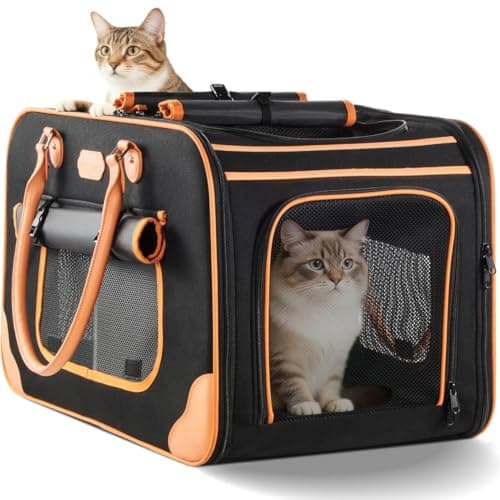
Extra Large Cat Carrier for 2 Cats, 2-in-1 Soft Pet Carrier Bag with Removable Divider for Large Cats Small Dogs up to 50 LBS, Foldable Two Cat Carrier for Travel, Ventilated Design, 24"x14"x15.5"
The most adaptable and best-built option here for large cats that need extra space and ventilation.
- 2-in-1 divider design
- Reinforced 1200D Oxford fabric
- 6 mesh windows for airflow
- Bigger than many owners need
- Soft-sided build still requires care
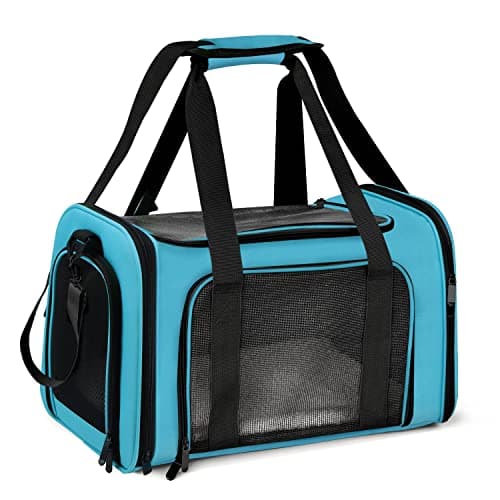
Henkelion Large Cat Carriers Dog Carrier Pet Carrier for Large Cats Dogs Puppies up to 25Lbs, Big Dog Carrier Soft Sided, Collapsible Travel Puppy Carrier - Large - Blue
A practical low-frills choice for occasional travel and vet visits.
- Foldable and easy to store
- Padded shoulder strap
- Four-side mesh ventilation
- Not airline approved
- Best for shorter trips
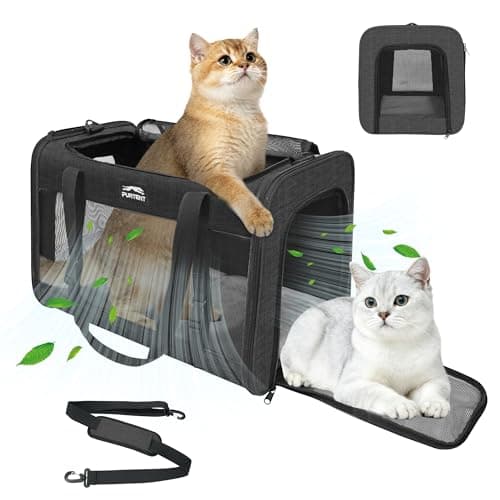
Soft-Sided Large Cat Carrier for 2 Cats, Spacious Foldable Pet Travel Carrier for Large Cats up to 25 Lbs, Double Cat Bag with Shoulder Strap, 20x13x13 Inch, Fits Maine Coon and Small Dogs, Black
A strong road-trip option with the structure and restraint features car travel demands.
- Built-in car buckle
- Steel frame and fiberglass rods
- Top-load access
- Lower capacity than the top pick
- Soft sides need careful handling
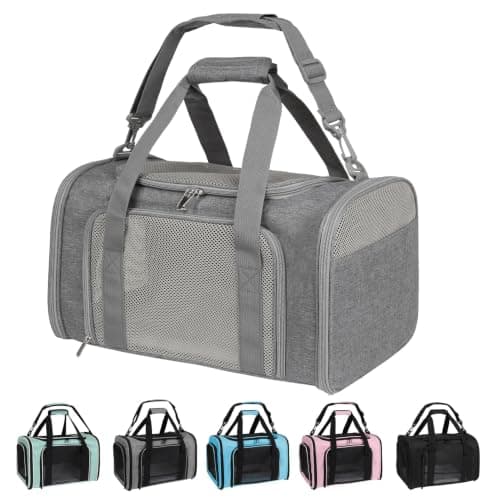
Yipincover Carriers Soft-Sided Large Pet Carrier for Cats Dogs Small Animals Up to 35Lbs,Top Load Carrier,Ventilated Design,Portable Cat Carrier Airline Approved(X-Large, Grey)
A versatile mid-range pick with useful comfort and transport features.
- Top-load entry
- Four-side mesh ventilation
- Removable base and fleece bed
- May be tight for very large breeds
- Airline fit varies by carrier rules
Who this is for: Best for owners of large cats who need a safer, roomier carrier for vet trips, car rides, and general travel.
How to Choose the Best Heavy-Duty Cat Carrier for Large Breeds in 2026: Complete Buying Guide
If you’re figuring out how to choose a heavy-duty cat carrier for large breeds, the main challenge is finding a carrier that feels secure without being cramped. Large cats need more than “big enough on paper” — they need reinforced structure, reliable ventilation, and enough room to sit, turn, and settle without the carrier collapsing around them. The most common mistake buyers make is choosing by weight alone instead of checking the carrier’s actual interior length, height, and structural support.
For this guide, Scout’s Picks reviewed manufacturer specifications, published product details, and verified owner feedback patterns to help you compare options with confidence. This is a research-based buying guide, not hands-on testing.
Key Features to Look For
1) Interior size that matches your cat’s body, not just the weight limit
With large breeds, the biggest mistake is buying a carrier that technically supports the right weight but is too short or too low for your cat to stand or turn around. Look for published dimensions and compare them to your cat’s length and height. A carrier that fits a Maine Coon or similarly large cat should give your pet enough room to reposition comfortably during travel.
2) Reinforced structure that won’t sag or collapse
Heavy-duty carriers should keep their shape when lifted, carried, or placed in a car. Steel frames, fiberglass rods, reinforced panels, and rigid base inserts all matter because they prevent the “taco effect” you get with flimsy soft carriers. That stability helps reduce stress for anxious cats and makes loading and unloading easier for you.
3) Strong ventilation on multiple sides
Large cats generate more heat and can feel trapped quickly in poorly ventilated carriers. Mesh windows on several sides improve airflow and visibility, which can help reduce panic. The best carriers balance ventilation with durability, so the mesh is protected by a sturdy frame and tear-resistant fabric.
4) Escape-resistant closures and safety tethering
For powerful cats, zippers and entry points need to be secure. Claw-resistant zippers, locking zipper pulls, and interior safety tethers are important because they reduce the chance of a sudden escape when you open the carrier. If your cat is strong or prone to bolting, this feature is especially valuable.
5) Easy-loading design for a stressed or reluctant cat
Top-load openings, wide side doors, and removable dividers can make a huge difference when you’re trying to place a large cat inside without a struggle. A carrier that opens widely is usually easier to use at the vet, in the car, or at home when your cat is already anxious. This is one of the most practical features for owners of bigger breeds.
6) Comfortable base and washable interior
A supportive base insert helps your cat feel more stable, especially on car rides. Removable fleece pads, washable liners, and wipe-clean fabrics matter because accidents, drool, and shedding are common during travel. A carrier that’s easy to clean is more likely to stay in regular use.
7) Carrying options that match real-world travel
Heavy-duty doesn’t just mean strong — it should also be manageable. Padded shoulder straps, dual handles, seatbelt compatibility, and luggage straps make transport easier and safer. If you travel by car often, look for a carrier that can be secured in place instead of sliding around.
What to Avoid
- Weight-only sizing claims. A carrier can list a high weight limit and still be too tight for a long or tall cat. Always check dimensions.
- Thin fabric with weak mesh. Large cats can press, scratch, and push harder than smaller pets, so lightweight material alone is not enough.
- Flimsy zippers or open-top designs without security. Easy access is helpful, but not if the carrier can be opened accidentally or escaped from.
- Carriers that collapse when lifted. If the structure sags, your cat may feel unstable and more anxious.
- Poor airflow. Limited mesh and blocked ventilation can make the carrier uncomfortable, especially in warm weather or during longer rides.
- Ignoring your cat’s actual dimensions. Large breeds vary a lot in body length, shoulder width, and height, so “large” on the label does not guarantee a proper fit.
Our Top Picks
Below are the strongest research-backed options from the product list, organized by use case. Each one is a soft-sided carrier, but they differ in size, structure, and travel features — which is exactly what matters when you’re learning how to choose a heavy-duty cat carrier for large breeds.
Best Overall: Extra Large Cat Carrier for 2 Cats, 2-in-1 Soft Pet Carrier Bag with Removable Divider for Large Cats Small Dogs up to 50 LBS, Foldable Two Cat Carrier for Travel, Ventilated Design, 24"x14"x15.5"


This is the most versatile pick in the roundup because it can function as one large carrier or split into two compartments with the removable divider. The reinforced 1200D Oxford fabric, claw-resistant zippers, washable base pad, and 6 large mesh windows make it a strong fit for owners who want one carrier that can adapt to different travel needs.
- ✓ 2-in-1 design can be used as one large space or split into two sections
- ✓ Reinforced fabric and claw-resistant zippers support heavy-duty use
- ✓ Strong ventilation and foldable build improve comfort and storage
- ✗ Larger footprint may be more carrier than some owners need
- ✗ Soft-sided design still requires careful handling with very active cats
Best Budget: Henkelion Large Cat Carriers Dog Carrier Pet Carrier for Large Cats Dogs Puppies up to 25Lbs, Big Dog Carrier Soft Sided, Collapsible Travel Puppy Carrier - Large - Blue
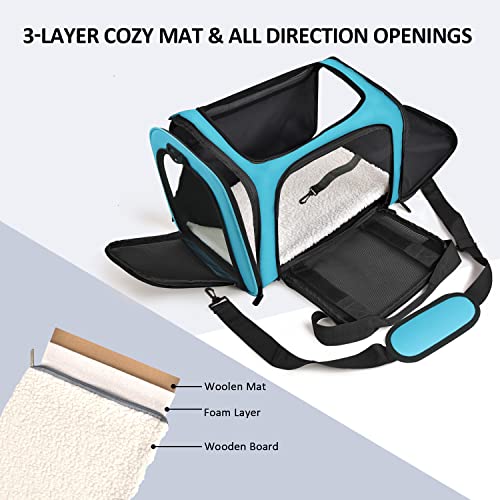
If you want a straightforward soft carrier for vet visits, car rides, or short trips, this one offers a practical entry point. It includes a padded shoulder strap, handles, four-side mesh, and a foldable design, but it’s best suited to cats that fit comfortably within the stated dimensions rather than just by weight.
- ✓ Lightweight, foldable design is easy to store and carry
- ✓ Mesh panels improve airflow and visibility
- ✓ Padded shoulder strap adds convenience for short trips
- ✗ Not airline approved
- ✗ Best for smaller large cats that fit the dimensions, not the heaviest or longest breeds
Best for Car Travel: Soft-Sided Large Cat Carrier for 2 Cats, Spacious Foldable Pet Travel Carrier for Large Cats up to 25 Lbs, Double Cat Bag with Shoulder Strap, 20x13x13 Inch, Fits Maine Coon and Small Dogs, Black


This carrier stands out for road trips and in-car stability. The built-in car buckle, steel frame, fiberglass rods, and safety tether are all useful if you want a soft carrier that stays structured in transit. It also has a top load opening, which is a big help when loading a reluctant cat.
- ✓ Car buckle and seatbelt compatibility support safer vehicle transport
- ✓ Steel frame and fiberglass rods help the carrier keep its shape
- ✓ Top-load access can make loading easier for nervous cats
- ✗ Lower weight limit than the largest premium option
- ✗ Soft-sided construction still requires careful handling
Best for Airline-Style Travel Research: Yipincover Carriers Soft-Sided Large Pet Carrier for Cats Dogs Small Animals Up to 35Lbs,Top Load Carrier,Ventilated Design,Portable Cat Carrier Airline Approved(X-Large, Grey)


This model is a good fit if you want a carrier that emphasizes ventilation, portability, and a more travel-ready layout. It includes four-sided mesh, a removable base insert, a washable fleece bed, and dual carrying handles that can also work as a seatbelt or luggage strap setup.
- ✓ Four-sided mesh and top-load entry improve airflow and access
- ✓ Removable base and fleece bed add comfort for longer rides
- ✓ Dual handles and strap options make it flexible for travel
- ✗ Dimensions may still be tight for very large breeds
- ✗ “Airline approved” still depends on the specific airline’s rules
Budget Guide: What You Get at Each Tier
Budget tier
Budget carriers usually focus on the essentials: a soft-sided build, foldability, basic mesh ventilation, and a padded strap or handles. They’re best for short vet visits, car rides, or occasional use. In this tier, you should expect fewer structural reinforcements and less advanced security, so fit and handling matter more than extra features.
Mid-range tier
Mid-range carriers typically add better structure, stronger materials, and more thoughtful travel features. You’ll often see top-load access, seatbelt compatibility, washable inserts, better ventilation, and sturdier frames or support rods. This is the sweet spot for many owners of large cats because it balances comfort, safety, and usability.
Premium tier
Premium carriers usually offer the most flexibility and the strongest materials. Expect reinforced fabric, more ventilation panels, removable dividers, better stability, and a more polished design for multi-scenario travel. If you’re transporting a very large cat, two cats, or a cat that needs extra space and security, premium features can be worth prioritizing.
Frequently Asked Questions
How do I choose the right size cat carrier for a large breed?
Measure your cat’s length and height, then compare those measurements to the carrier’s interior dimensions. Don’t rely only on the listed weight limit, because large breeds can be long, tall, or broad even when they fall within the same weight range.
Is a soft-sided carrier safe for a large cat?
Yes, if it has a reinforced frame, secure zippers, sturdy fabric, and proper ventilation. Soft-sided carriers are often easier to carry and store, but they should still hold their shape and resist sagging under a bigger cat.
What features matter most for anxious cats?
Top-load access, strong ventilation, a stable base, and a carrier that keeps its shape are especially helpful. Interior space also matters because a cramped carrier can make stress worse.
Can I use a heavy-duty cat carrier for car travel?
Yes, but look for seatbelt compatibility, a stable base, and a design that won’t slide around. Car-specific features like a built-in buckle or dual handles that secure to a seatbelt can improve stability.
Should I buy a carrier based on weight or dimensions?
Dimensions should come first. Weight is useful, but it doesn’t tell you whether your cat can comfortably sit, turn, and lie down inside the carrier.
Frequently asked questions
How do I choose the right size cat carrier for a large breed?
Measure your cat’s length and height, then compare those measurements to the carrier’s interior dimensions. Don’t rely only on the listed weight limit, because large breeds can be long, tall, or broad even when they fall within the same weight range.
Is a soft-sided carrier safe for a large cat?
Yes, if it has a reinforced frame, secure zippers, sturdy fabric, and proper ventilation. Soft-sided carriers are often easier to carry and store, but they should still hold their shape and resist sagging under a bigger cat.
What features matter most for anxious cats?
Top-load access, strong ventilation, a stable base, and a carrier that keeps its shape are especially helpful. Interior space also matters because a cramped carrier can make stress worse.
Can I use a heavy-duty cat carrier for car travel?
Yes, but look for seatbelt compatibility, a stable base, and a design that won’t slide around. Car-specific features like a built-in buckle or dual handles that secure to a seatbelt can improve stability.
Should I buy a carrier based on weight or dimensions?
Dimensions should come first. Weight is useful, but it doesn’t tell you whether your cat can comfortably sit, turn, and lie down inside the carrier.

How Scout Picks
Specs & standards
We start from manufacturer specs and category standards.
Expert tests
We weigh independent expert and lab test results.
Verified owner reviews
We read patterns across thousands of real owners.
Scout is our illustrated guide — we research from specs, independent expert tests, and thousands of verified owner reviews. We don't lab-test products ourselves.
How we pick →Get the Full Pet Gear Buyer's Guide
Join our free newsletter — we'll send our latest Pet Gear picks, specs and verdicts straight to your inbox.
Free. No spam. Unsubscribe anytime.
Was this review helpful?
Be the first to share your feedback on this review.
Sign in to vote and let us know what you think.
Discussion (0)
No comments yet. Be the first to start the discussion.
Related Reviews

How to Choose the Best Cat Stroller for Urban Walks in 2026: Complete Buying Guide
If you’re trying to figure out how to choose a cat stroller for urban walks , the hardest part is separating genuinely city-friendly features from marketing fluff. Sidewalk cracks, crowded crosswalks, tight elevators, and sudden stops all create problems a basic stroller may not handle well. This gu
How to Choose the Best Microchip Cat Flap in 2026: Complete Buying Guide
If your cat keeps getting out while neighborhood cats, raccoons, or other animals wander in, the right microchip cat flap can solve both problems at once. The trick is choosing a model that matches your cat’s microchip, your installation space, and the level of control you need day to day. The most

8 Best Robotic Cat Toys for Aggressive Chewers in 2026 — Tougher Picks for Hard-Playing Cats
If your cat shreds plush toys, bats automated toys under the couch, or treats every new gadget like a chew challenge, you need more than a cute motion toy. The best robotic cat toys for aggressive chewers 2026 are the ones that combine sturdy materials, smart motion, and easy rechargeability so play