

Scout's Take
5 picks worth buying
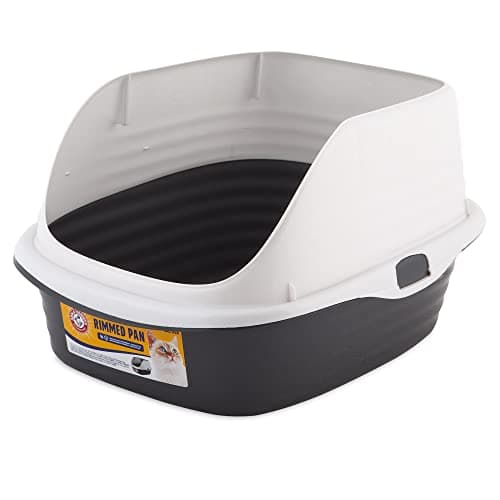
Arm & Hammer Rimmed Cat Litter Box with High Sides and Microban, Made in USA
The best all-around size choice for many adult cats because it balances room, containment, and price.
- Large 18.7 x 15.5 x 10.6-inch size
- High sides help reduce spills
- Strong value for most adult cats
- Open design offers less odor control
- High sides may be tough for small cats
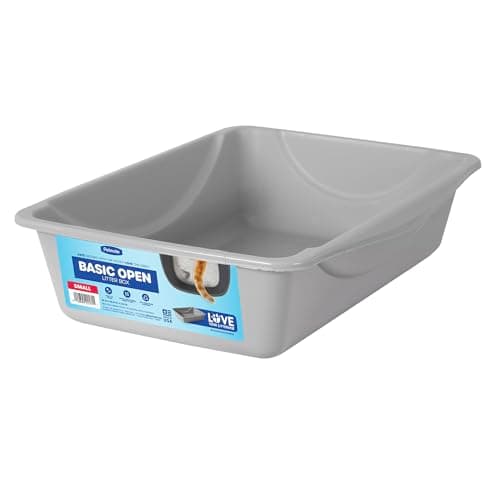
Petmate Basic Open Cat Litter Pan, Multidirectional Easy to Clean Plastic Litter Box, Gray, Made in USA, 14" x 10.5" x 3.5", Small Recommended for Kittens and Small Cats
A solid low-cost starter pan for kittens or very small cats.
- Very low entry for kittens
- Extremely affordable
- Simple open pan is easy to clean
- Too small for most adults
- Limited scatter control
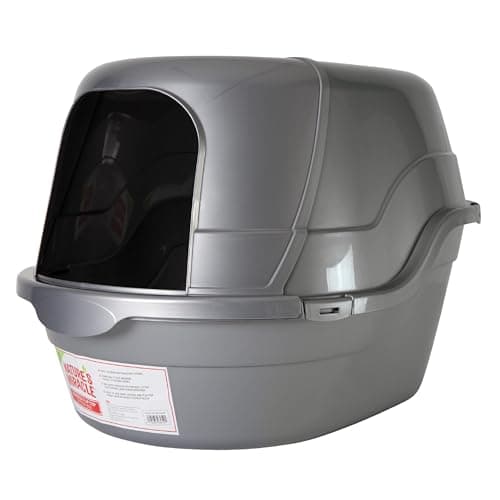
Nature's Miracle Hooded Flip Top Cat Litter Box with Charcoal Filter
A smart pick for homes that prioritize odor control and privacy.
- Hood helps contain scatter
- Charcoal filter supports odor control
- Flip-top front improves cleaning access
- Enclosed feel may bother some cats
- Less roomy than open large boxes
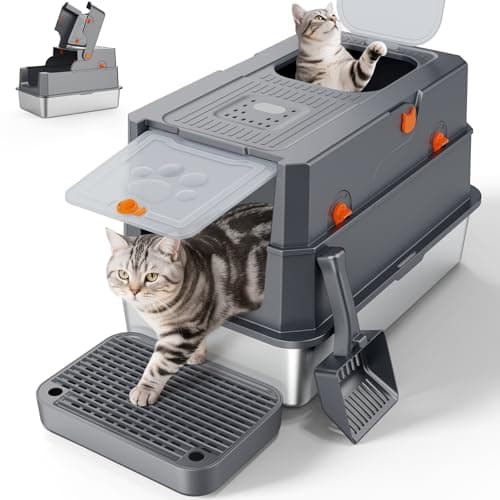
FURTIME Stainless Steel Litter Box with Lid, Enclosed Metal Cat Litter Box
The premium choice for shoppers who want room, durability, and easier long-term cleaning.
- Very large 23 x 15 x 15-inch interior
- Stainless steel resists odor retention
- Dual-entry design adds flexibility
- Higher price than plastic options
- Enclosed design may not suit every cat
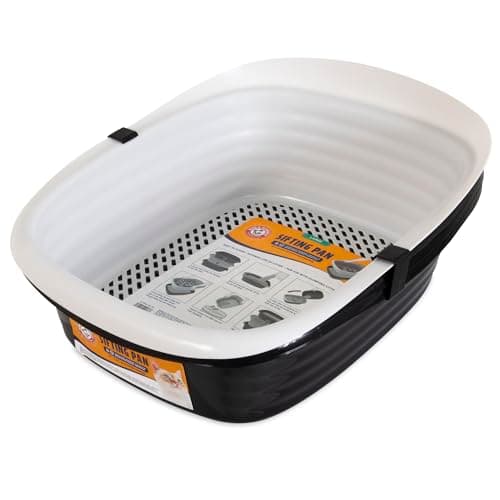
Arm & Hammer Large Sifting Litter Box Scoop Free Cat Litter Tray with Microban, Made in USA
A practical pick for owners who want a larger box with simpler maintenance.
- Sifting design reduces scooping
- Large tray fits many adult cats
- Works with multiple litter types
- Sifting systems are not for everyone
- Less spacious than the biggest enclosed box
Who this is for: Best for cat owners who need a practical way to match litter box size to their cat’s comfort, mobility, and cleanup needs.
How to Choose the Best Litter Box Size in 2026: Complete Buying Guide
Choosing the wrong litter box size is one of the fastest ways to create litter scatter, odor issues, and a cat that avoids the box altogether. The most common mistake buyers make is picking a box based on the room it fits in, not the cat’s body size and turning radius. If you’re figuring out how to choose a litter box size, this guide breaks down the practical rules that help you buy once and buy right.
Scout’s Picks researched manufacturer specs, published expert guidance, and verified owner feedback to build this guide. Since cats vary a lot in size, age, mobility, and habits, the “best” litter box size is really the one that gives your cat enough room to enter, turn, dig, and exit comfortably without making your home harder to keep clean.
Key Features to Look For
1) Interior length that matches your cat’s body
A widely used guideline is that the litter box should be about 1.5 times the length of your cat from nose to base of tail. That extra room matters because cats don’t just stand still in the box—they turn, dig, and reposition. A box that’s too short can cause over-the-edge messes and may discourage use.
2) Width that allows a full turn
Length gets the attention, but width is just as important. Cats need enough space to pivot without backing into walls or stepping outside the pan. A cramped width is especially frustrating for larger breeds, chunky cats, and cats that like to dig before they go.
3) Entry height your cat can comfortably clear
Size isn’t only about footprint. The front wall or entry lip should be low enough for kittens, seniors, and cats with arthritis, but high enough to help contain litter. If your cat is small or mobility-limited, an oversized high-sided box can become difficult to use even if the interior is roomy.
4) Side height for litter containment
Higher sides help reduce scatter from enthusiastic diggers and sprayers, but they can also make access harder. The right balance depends on your cat’s habits. If your cat kicks litter everywhere, higher sides are useful. If your cat is elderly or recovering from injury, a lower entry is usually safer.
5) Open vs. hooded design
Open boxes usually feel more spacious and are easier for cats to enter, while hooded boxes can help with odor control and privacy. A hooded design can also make a box feel smaller inside, so the same external dimensions may not translate to the same comfort level as an open pan.
6) Cleaning access and shape
Even the right size can become the wrong choice if it’s a pain to clean. Look for shapes that let you scoop or dump without fighting corners, lids, or seams. A box that’s easy to maintain is more likely to stay clean, which helps with odor and increases the odds your cat keeps using it.
7) Litter depth compatibility
Some boxes are sized well on paper but don’t leave enough room for the litter depth your cat prefers. Cats that dig deeply often do better in larger boxes because they need space to create a proper bathroom setup without pushing litter over the edge.
What to Avoid
When learning how to choose a litter box size, it helps to know the common mistakes that cause daily frustration. These are the biggest red flags.
- Buying for the kitten, not the adult cat. Kittens grow fast, and an undersized box can become useless within months.
- Choosing a box that only “fits” the floor plan. A box that tucks neatly into a corner may still be too small for your cat.
- Ignoring mobility needs. High walls and tall entrances can be a dealbreaker for seniors, injured cats, or short-legged breeds.
- Assuming covered means better. Hooded boxes can trap odors if they’re too small or poorly ventilated, and some cats dislike the enclosed feel.
- Going too small to save money. A cheap box that causes messes, stress, or avoidance often costs more in litter, cleanup, and replacement.
- Overlooking multi-cat households. Bigger boxes are often necessary when multiple cats share space, especially if one cat is dominant or picky.
Our Top Picks
Below are the best product options from the current lineup for different size needs. Each one is paired with a practical use case so you can match the box to your cat’s body size, habits, and mobility.
Best for kittens and very small cats: Petmate Basic Open Cat Litter Pan, Multidirectional Easy to Clean Plastic Litter Box, Gray, Made in USA, 14" x 10.5" x 3.5", Small Recommended for Kittens and Small Cats 4.99$ ✓ Prime

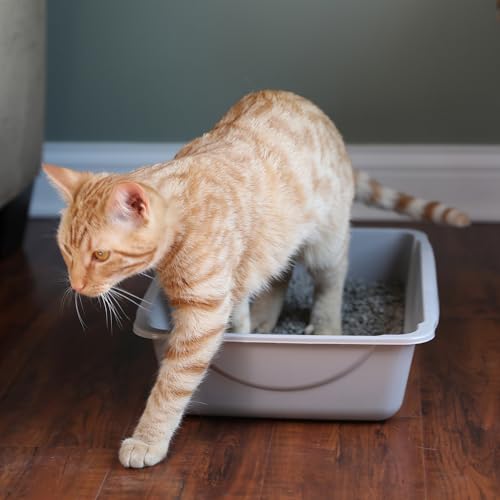
This compact open pan is the most straightforward option in the group for tiny cats, kittens, or temporary setups. Its low entry and simple shape make it easy for smaller cats to access, and the wide base helps contain mess better than a flimsy tray.
- ✓ Low 3.5-inch profile helps small cats step in easily
- ✓ Very affordable way to test a cat’s size preference
- ✓ Open design is easy to clean and monitor
- ✗ Too small for most adult cats
- ✗ Limited scatter control for strong diggers
Best budget large open box: Arm & Hammer Rimmed Cat Litter Box with High Sides and Microban, Made in USA 4.7★ (reviews not provided) ✓ Prime
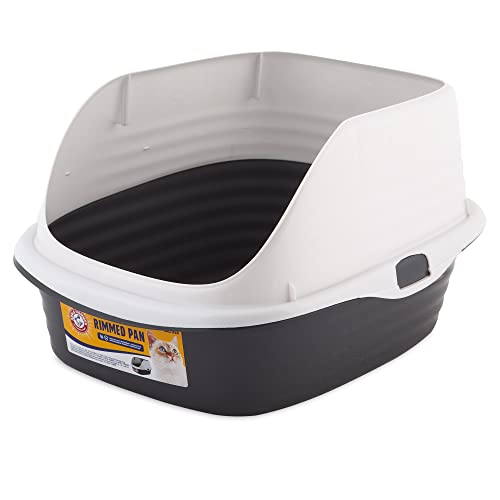

If you want a roomy open box without moving into premium pricing, this is one of the most practical picks. The 18.7 x 15.5 x 10.6-inch footprint gives many adult cats enough room to turn, and the high sides help reduce litter spill for cats that dig aggressively.
- ✓ Large enough for many medium-to-big cats
- ✓ High sides help keep litter in the box
- ✓ Good value for the size
- ✗ Still open, so odor control is limited versus covered boxes
- ✗ High sides may be awkward for very small or senior cats
Best for odor-conscious households: Nature's Miracle Hooded Flip Top Cat Litter Box with Charcoal Filter 4.5★ (reviews not provided) ✓ Prime


This hooded box is a smart choice when odor control matters more than an ultra-open feel. The flip-top front makes cleaning easier than many enclosed models, and the charcoal filter adds another layer of scent management for apartments or small homes.
- ✓ Hood helps contain scatter and spray
- ✓ Charcoal filter supports odor control
- ✓ Front access is convenient for routine cleaning
- ✗ Enclosed design may feel cramped for larger cats
- ✗ Some cats dislike hooded boxes
Best premium roomy option: FURTIME Stainless Steel Litter Box with Lid, Enclosed Metal Cat Litter Box 4.6★ (reviews not provided) ✓ Prime
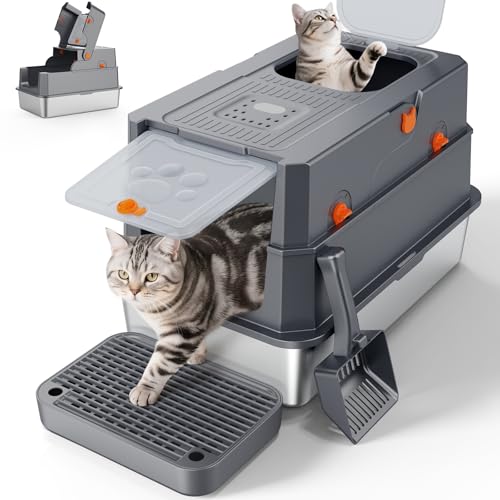

At 23 x 15 x 15 inches, this is the most spacious premium pick in the lineup and a strong match for bigger cats or households that want more room per cat. The stainless steel build, dual-entry design, and leak-focused construction make it especially appealing for owners who want durability and easier cleanup over the long haul.
- ✓ Very large interior for adult cats
- ✓ Stainless steel resists odor retention better than many plastic boxes
- ✓ Dual-entry design helps different cats access it
- ✗ Higher price than plastic options
- ✗ Enclosed structure may not suit every cat
Best simple sifting option for multi-litter homes: Arm & Hammer Large Sifting Litter Box Scoop Free Cat Litter Tray with Microban, Made in USA 4.4★ (reviews not provided) ✓ Prime

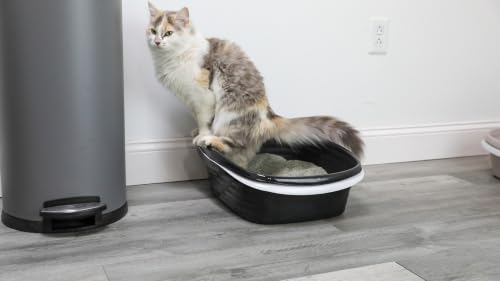
This is a useful pick if you want a larger tray with easier maintenance and compatibility across several litter types. The brand’s own sizing guidance says it should be about 1.5 times your cat’s length, which makes it a good fit for shoppers who want a more deliberate size-based choice.
- ✓ Sifting design simplifies cleaning
- ✓ Large footprint supports bigger cats
- ✓ Works with several litter types
- ✗ Sifting systems may not appeal to every owner
- ✗ Not as spacious as the largest enclosed option
Budget Guide: What You Get at Each Price Point
Under $10: Basic function and small-cat fit
At this price, you’re mostly paying for simplicity. The Petmate Basic Open Cat Litter Pan is the best example here: it’s inexpensive, easy to access, and practical for kittens or very small cats. Expect basic plastic construction and minimal odor control, but a good entry point if you need a starter box or a backup.
$10 to $25: Better size and better containment
This is the sweet spot for many cat owners. The Arm & Hammer Rimmed Cat Litter Box gives you a larger footprint and higher sides without a big price jump. In this range, you can usually expect more comfortable dimensions, better litter containment, and features like odor protection or reinforced rims.
$25 to $40: Covered designs and odor help
Once you move above $25, you start seeing enclosed boxes and stronger odor-management features. The Nature's Miracle Hooded Flip Top Cat Litter Box is a good example: you’re paying for privacy, a charcoal filter, and easier cleanup access. This price tier is ideal if odor control matters more than a bare-bones box.
$40 and up: Premium materials and long-term durability
Premium options like the FURTIME Stainless Steel Litter Box with Lid cost more, but they also offer larger interiors, sturdier construction, and better resistance to odor retention than many plastic models. If you want a box that may last longer and suit a larger cat, this tier is worth considering.
Frequently Asked Questions
How big should a litter box be for an adult cat?
A good rule is that the box should be about 1.5 times your cat’s length, measured from nose to base of tail. That gives enough room to turn, dig, and exit without feeling cramped.
Is a bigger litter box always better?
Usually, yes for comfort and cleanliness, but not always for access. Very large or high-sided boxes can be harder for kittens, seniors, or cats with mobility issues to enter safely.
Should I buy a covered or uncovered litter box?
Covered boxes can help with odor and scatter, but uncovered boxes usually feel more open and easier for cats to use. The best choice depends on your cat’s size, confidence, and your cleanup priorities.
What size litter box do I need for two cats?
For two cats, a larger box is usually better, but you still want enough total litter-box capacity in the home. In many households, one oversized box or multiple medium boxes works better than a single small one.
How do I know if my litter box is too small?
Signs include litter kicked outside the box, urine or stool hitting the sides, frequent misses, or a cat that seems reluctant to enter. If your cat can’t comfortably turn around, the box is probably too small.
Frequently asked questions
How big should a litter box be for an adult cat?
A good rule is that the box should be about 1.5 times your cat’s length, measured from nose to base of tail. That gives enough room to turn, dig, and exit without feeling cramped.
Is a bigger litter box always better?
Usually, yes for comfort and cleanliness, but not always for access. Very large or high-sided boxes can be harder for kittens, seniors, or cats with mobility issues to enter safely.
Should I buy a covered or uncovered litter box?
Covered boxes can help with odor and scatter, but uncovered boxes usually feel more open and easier for cats to use. The best choice depends on your cat’s size, confidence, and your cleanup priorities.
What size litter box do I need for two cats?
For two cats, a larger box is usually better, but you still want enough total litter-box capacity in the home. In many households, one oversized box or multiple medium boxes works better than a single small one.
How do I know if my litter box is too small?
Signs include litter kicked outside the box, urine or stool hitting the sides, frequent misses, or a cat that seems reluctant to enter. If your cat can’t comfortably turn around, the box is probably too small.
Score breakdown
- value
- 8.2
- usability
- 8.7
- durability
- 7.8
- performance
- 8.6
- buyerFeedback
- 8.0

How Scout Picks
Specs & standards
We start from manufacturer specs and category standards.
Expert tests
We weigh independent expert and lab test results.
Verified owner reviews
We read patterns across thousands of real owners.
Scout is our illustrated guide — we research from specs, independent expert tests, and thousands of verified owner reviews. We don't lab-test products ourselves.
How we pick →Get the Full Pet Gear Buyer's Guide
Join our free newsletter — we'll send our latest Pet Gear picks, specs and verdicts straight to your inbox.
Free. No spam. Unsubscribe anytime.
Was this review helpful?
Be the first to share your feedback on this review.
Sign in to vote and let us know what you think.
Discussion (0)
No comments yet. Be the first to start the discussion.
Related Reviews
What is a New Kitten Gear Checklist? A Complete 2026 Guide
A new kitten gear checklist is the simplest way to make those first days at home less chaotic, less stressful, and a lot safer for both you and your kitten. Instead of guessing what you need after adoption day, a checklist helps you gather the essentials for feeding, litter, scratching, travel, and
How to Choose the Best Cat Harness in 2026: Complete Buying Guide
If you’re trying to figure out how to choose a cat harness , the biggest challenge is usually not finding one that looks cute — it’s finding one that your cat can actually wear safely and comfortably. A poor fit can lead to slipping out, chafing, or a full-on backyard escape attempt, which is why ha
Are Cat Backpacks Worth It Review (2026): Specs, Pros & Cons, and Who It's For
If you’re wondering are cat backpacks worth it , the short answer is: sometimes, yes — but only for the right cat and the right trip. A good backpack can make vet visits, quick errands, and apartment living easier, while a poor fit can turn travel into a stressful, sweaty mess for both of you. This