

Scout's Take
2 picks worth buying
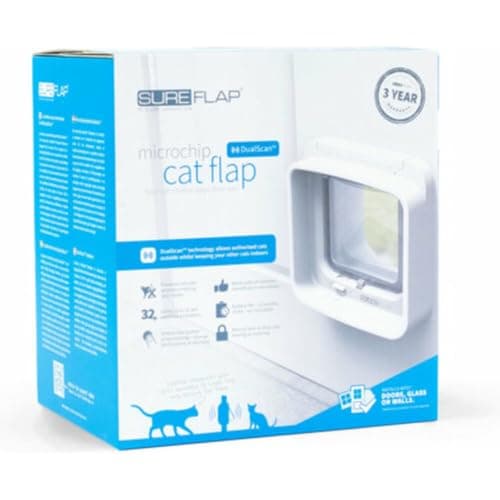
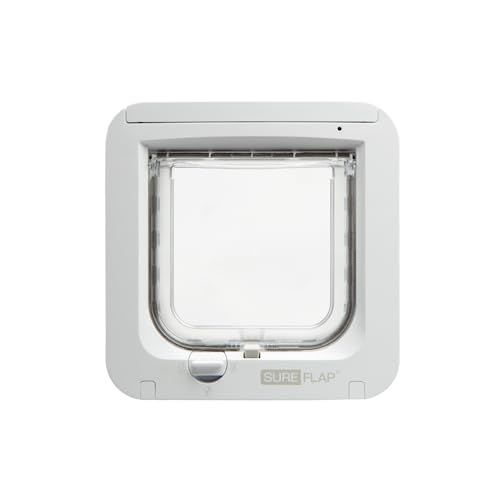
SureFlap DualScan Microchip Cat Door - Door Opening is 4 3/4" H x 5 5/8" W
The strongest all-around choice for households that want maximum control over cat access.
- Dual-scan access control
- Stores up to 32 pets
- More complex than basic models
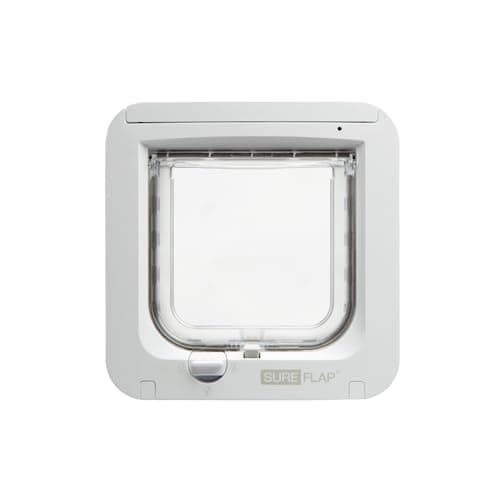
SureFlap - Sure Petcare Microchip Cat Flap, White, Scans Pet's ID on Entry, Check Your Cat's Size,Flap Opening is 4 3/4” (H) by 5 5/8” (W)
A dependable, straightforward microchip flap for buyers who want the essentials done well.
- Simple one-button programming
- Supports common chip formats
- Entry-only control
Who this is for: Best for cat owners who want secure selective entry and need help choosing the right flap for their home and pet size.
How to Choose the Best Microchip Cat Flap in 2026: Complete Buying Guide
If your cat keeps getting out while neighborhood cats, raccoons, or other animals wander in, the right microchip cat flap can solve both problems at once. The trick is choosing a model that matches your cat’s microchip, your installation space, and the level of control you need day to day. The most common mistake buyers make is focusing only on “microchip” and ignoring size, lock options, and whether the flap is designed for entry-only or entry-and-exit control.
This guide explains how to choose a microchip cat flap using manufacturer specs, independent expert coverage, and verified owner feedback patterns—not hands-on testing. You’ll also find a short list of standout models to help you narrow the field fast.
Key Features to Look For
1) Microchip compatibility
The first thing to check is whether the flap works with your cat’s implanted chip type. Some models support common chip formats such as 9-digit, 10-digit, and 15-digit IDs, while others advertise compatibility with all common microchips. If a flap can’t read your cat’s chip, nothing else matters—so this is the first filter to apply before comparing bells and whistles.
2) Selective entry vs. entry-and-exit control
Many microchip cat flaps are designed to let your cat out freely while only letting recognized pets back in. That’s ideal if you want to stop intruders without trapping your cat inside. If you need more control, look for dual-scan or timer-controlled models that can manage when pets can go out, come in, or both.
3) Pet capacity and household flexibility
If you have more than one cat, check how many pet identities the flap can store. Some models store around 30 to 32 pets, which is useful for multi-cat homes or households that foster animals. Higher capacity also helps if you want to add a backup pet later without replacing the unit.
4) Flap size and cut-out dimensions
A microchip reader is only useful if your cat can comfortably pass through the opening. Look at both the flap opening and the cut-out size, especially if your cat is larger than average or if you’re installing in a door, window, or wall. Owners commonly overlook this and end up with a flap that technically works but feels too small for their pet.
5) Locking modes and scheduling
Basic four-way locks are helpful because they let you set in-only, out-only, locked, or free access. More advanced models add timer control, which is useful for keeping cats indoors overnight or building a consistent routine. This feature matters most if you want a cat flap that does more than just recognize a chip.
6) Installation compatibility
Before buying, confirm where you plan to install the flap: a door, window, wall, or panel. Some models support multiple surfaces, but may need separate accessories for certain installs. The easier the fit with your home’s structure, the less likely you are to run into costly surprises during setup.
7) Battery life and low-battery alerts
Most microchip cat flaps are battery powered, so you’ll want a model with long battery life and a clear low-battery indicator. That matters because a dead battery can interrupt access control when you least expect it. Battery-powered designs are common because they avoid mains wiring, but they still need routine attention.
What to Avoid
Buying without checking the microchip format
A flap that doesn’t support your pet’s chip type is the biggest avoidable mistake. If you’re not sure what chip your cat has, verify it with your vet, shelter, or rescue before you buy.
Choosing the wrong size for your cat
Some flaps are built for small to medium cats, while others are better for larger cats or small dogs. If your cat is on the bigger side, compare the opening dimensions carefully instead of relying on the product name alone.
Ignoring the installation surface
Not every flap is equally simple to install in every location. A model that works well in a wooden door may need extra accessories for a wall, window, or metal panel. Skipping this check can turn a good product into a frustrating project.
Overlooking lock controls
If you only want basic selective entry, a simple model may be enough. But if you need overnight locking, routine control, or household-specific access rules, avoid models with limited lock options.
Assuming all “microchip” flaps do the same job
Some models only control entry, while others can also manage exit permissions. That difference matters a lot in multi-cat homes or when you want to keep one pet indoors. Read the feature set closely instead of assuming all microchip flaps are interchangeable.
Our Top Picks
Below are the strongest options from the product list, ranked by overall usefulness, feature set, and fit for common buyer needs. Each one excels in a slightly different situation, so the best choice depends on your home and your cat’s routine.
1) SureFlap DualScan Microchip Cat Door - Door Opening is 4 3/4" H x 5 5/8" W


Best Overall for households that want the most control over who can come and go. This model stands out because it uses dual-scan technology: it lets your cat out while also letting you set exit permissions for specific pets. That makes it a strong fit for multi-cat homes, households trying to keep one cat indoors, or buyers who want selective access in both directions.
- ✓ Dual-scan control lets you set exit permissions for each pet
- ✓ Stores up to 32 pets, which is excellent for multi-cat homes
- ✓ Works in doors, windows, or walls with accessories
- ✓ Uses common microchips and supports broad compatibility
- ✗ More advanced than a basic entry-only flap
- ✗ Batteries are not included
2) Cat Mate Microchip Activated Cat Flap (360) for Cats & Small Dogs, Gray


Best Budget for buyers who want reliable microchip entry control without moving into premium territory. It offers selective entry, a weather-resistant build, and a four-way rotary lock, making it a practical choice for everyday use. The self-lining installation support also helps if you’re fitting it into different door types or a thicker panel.
- ✓ Microchip-activated entry keeps out wildlife and stray animals
- ✓ Four-way rotary lock adds useful everyday control
- ✓ Weatherproof, brush-sealed design helps reduce drafts
- ✓ Works with several installation surfaces
- ✗ Less advanced than dual-scan or timer-based models
- ✗ Batteries are not included
3) Cat Mate Elite Microchip Cat Door with Timer Control

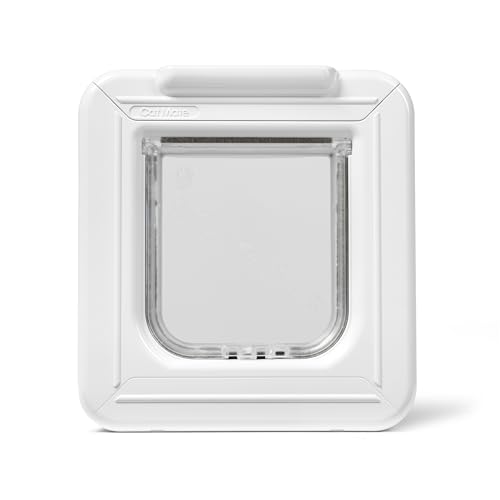

Best for routine control if you want a flap that can do more than selective entry. The built-in timer control is the standout feature here, because it lets you establish access windows and keep cats indoors overnight if needed. It’s a smart pick for owners who want structure without giving up microchip security.
- ✓ Timer control helps manage access by schedule
- ✓ Selective entry only, which is useful in multi-cat homes
- ✓ Stores multiple microchip IDs
- ✓ Battery-powered and designed for straightforward installation
- ✗ More complex than a basic flap
- ✗ Not the best fit if you only want simple entry control
4) SureFlap - Sure Petcare Microchip Cat Flap, White, Scans Pet's ID on Entry, Check Your Cat's Size,Flap Opening is 4 3/4” (H) by 5 5/8” (W)


Best for simple, dependable selective entry if you want a proven microchip flap with a straightforward setup. It focuses on the essentials: reading your cat’s implanted ID, keeping out intruders, and offering a clean one-button programming experience. It’s a strong fit for buyers who want a trusted, no-fuss solution.
- ✓ Reads common microchip formats for selective entry
- ✓ Simple one-button programming
- ✓ Can be installed in doors, windows, or walls with accessories
- ✓ Battery-powered with a low-battery indicator
- ✗ Entry-only control may be too basic for some homes
- ✗ Batteries are not included
Budget Guide: What You Get at Each Tier
Budget
At the budget tier, you usually get the core benefit of a microchip cat flap: selective entry that keeps out unwanted animals while letting your cat back in. Expect simpler controls, fewer advanced scheduling features, and a more basic lock system. Budget models can still be very practical if you mainly want reliable chip recognition and straightforward daily use.
Mid-range
Mid-range models tend to add better convenience and flexibility. That often means stronger installation versatility, improved lock options, better weather sealing, and more polished programming. This is the sweet spot for many buyers because it balances useful features with a simpler setup than premium models.
Premium
Premium microchip cat flaps usually offer the most control. Look for dual-scan technology, more advanced pet management, timer functions, and support for multi-pet households. These are best for owners who want to fine-tune access rules, manage multiple cats, or keep one pet indoors while letting another come and go.
Frequently Asked Questions
How do I know if my cat’s microchip will work with a cat flap?
Check the flap’s supported chip formats and compare them with your cat’s implanted microchip type. If you’re unsure, your veterinarian, shelter, or rescue can help confirm the chip number format.
Is a microchip cat flap better than a magnetic collar flap?
Usually, yes. Microchip flaps are more secure because they respond to your cat’s implanted ID rather than a collar accessory that can be lost, removed, or damaged.
Can a microchip cat flap keep out stray cats?
Yes, that is one of the main reasons people buy them. The flap only opens for recognized pets, which helps block stray cats and other unwanted animals from entering.
Do I need a dual-scan cat flap?
Not always. Dual-scan is most useful if you want to control both entry and exit for specific pets. If you only need to stop intruders from coming in, a standard selective-entry flap may be enough.
What size cat flap should I buy?
Choose a flap based on your cat’s body size, not just the microchip feature. Compare the flap opening and cut-out dimensions carefully, especially if your cat is large or if you’re installing into a wall or thicker door.
Frequently asked questions
How do I know if my cat’s microchip will work with a cat flap?
Check the flap’s supported chip formats and compare them with your cat’s implanted microchip type. If you’re unsure, your veterinarian, shelter, or rescue can help confirm the chip number format.
Is a microchip cat flap better than a magnetic collar flap?
Usually, yes. Microchip flaps are more secure because they respond to your cat’s implanted ID rather than a collar accessory that can be lost, removed, or damaged.
Can a microchip cat flap keep out stray cats?
Yes, that is one of the main reasons people buy them. The flap only opens for recognized pets, which helps block stray cats and other unwanted animals from entering.
Do I need a dual-scan cat flap?
Not always. Dual-scan is most useful if you want to control both entry and exit for specific pets. If you only need to stop intruders from coming in, a standard selective-entry flap may be enough.
What size cat flap should I buy?
Choose a flap based on your cat’s body size, not just the microchip feature. Compare the flap opening and cut-out dimensions carefully, especially if your cat is large or if you’re installing into a wall or thicker door.

How Scout Picks
Specs & standards
We start from manufacturer specs and category standards.
Expert tests
We weigh independent expert and lab test results.
Verified owner reviews
We read patterns across thousands of real owners.
Scout is our illustrated guide — we research from specs, independent expert tests, and thousands of verified owner reviews. We don't lab-test products ourselves.
How we pick →Get the Full Pet Gear Buyer's Guide
Join our free newsletter — we'll send our latest Pet Gear picks, specs and verdicts straight to your inbox.
Free. No spam. Unsubscribe anytime.
Was this review helpful?
Be the first to share your feedback on this review.
Sign in to vote and let us know what you think.
Discussion (0)
No comments yet. Be the first to start the discussion.
Related Reviews

8 Best Robotic Cat Toys for Aggressive Chewers in 2026 — Tougher Picks for Hard-Playing Cats
If your cat shreds plush toys, bats automated toys under the couch, or treats every new gadget like a chew challenge, you need more than a cute motion toy. The best robotic cat toys for aggressive chewers 2026 are the ones that combine sturdy materials, smart motion, and easy rechargeability so play

8 Best Airline-Approved Hard-Shell Cat Carriers in 2026 — Safer, Easier Travel for Cats and Small Pets
If airline travel with your cat feels stressful, the carrier is usually the biggest source of worry: Will it fit the airline rules, stay secure, and keep your pet calm? This roundup of the best airline-approved hard-shell cat carriers focuses on models that are built for travel-minded pet parents wh

4 Best Dual-Bowl Automatic Feeders for Wet and Dry Cat Food in 2026 — Fresh Meals, Less Guesswork
If you’re trying to keep wet and dry cat food on schedule without coming home to spoiled meals or hungry meows, the right feeder can make a big difference. The tricky part is that not every “automatic feeder” is built for wet food, and even fewer are truly suited to two-bowl feeding. This roundup fo