

Scout's Take
4 picks worth buying
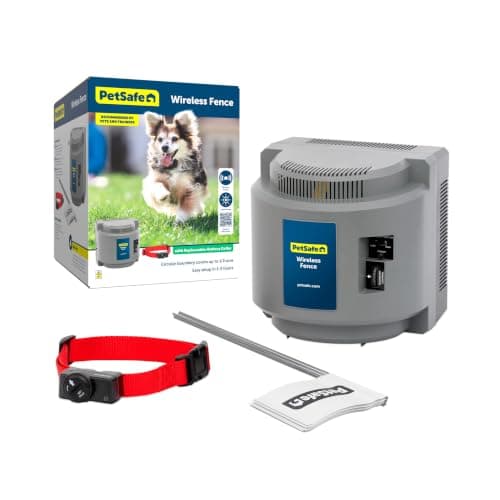
PetSafe Wireless Pet Containment System, Up to 1/2 Acre
The best all-around choice for simple wireless containment in open yards.
- No digging or wire to bury
- Fast setup
- Static-free reentry
- Circular boundary limits flexibility
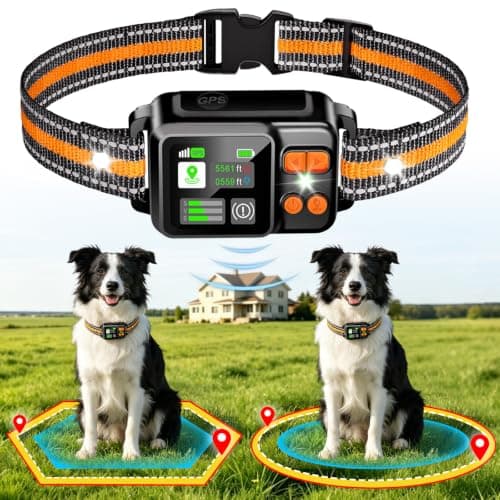
GPS Wireless Dog Fence Collar System 2 Mode Boundary IPX7 No Monthly Fee
A lower-cost GPS-style option for shoppers who want to avoid subscriptions.
- No monthly fee
- App-free operation
- IPX7 waterproof
- Less brand trust than premium options
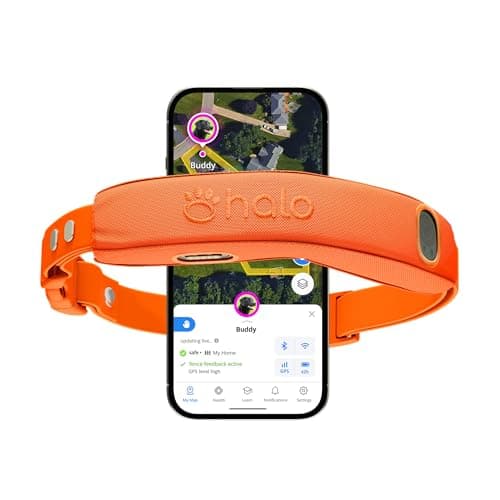
Halo Collar 5 GPS Wireless Dog Fence
A strong premium pick for larger or more complex properties.
- High-accuracy GPS
- Real-time alerts
- Built-in training guidance
- Subscription required
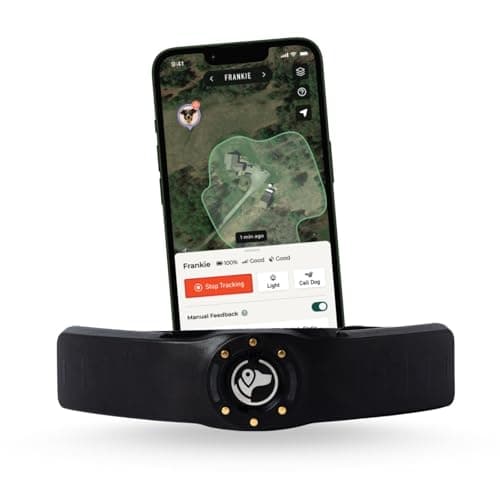
SpotOn Nova GPS Dog Fence Collar, App-Controlled Wireless Fence
The most advanced option for buyers who want detailed virtual boundary control.
- Unlimited custom fences
- App-controlled monitoring
- Precision GPS
- Very expensive
Who this is for: Best for owners who want a simple no-dig containment solution for an open yard and can commit to training.
Do Invisible Fences Work? 2026 Review: Specs, Pros & Cons, and Who It's For
Key Specifications
| Category | Details |
|---|---|
| Product type | Wireless pet containment system |
| Coverage | Up to 1/2 acre circular coverage from the transmitter |
| Setup | No wire to bury; setup in a few hours |
| Boundary style | Circular wireless boundary |
| Reentry behavior | Static-free reentry |
| Power/portability | Portable indoor transmitter |
| Prime | ✓ Prime |
| Price | 28% OFF — Was $319.99 $231.56 |
Design & Build Quality
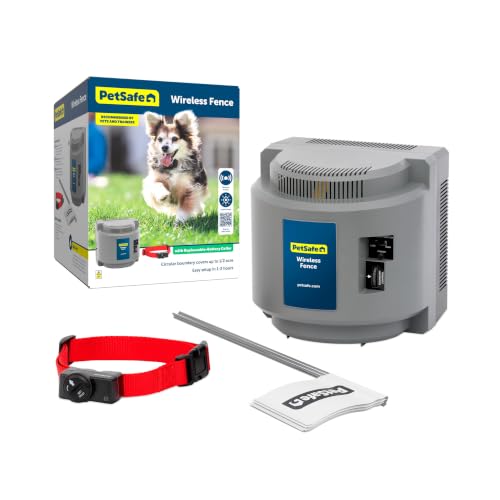
 If you’re asking “do invisible fences work,” the design answer matters as much as the training answer. Based on manufacturer specs and owner feedback patterns, the PetSafe Wireless Pet Containment System, Up to 1/2 Acre is built around simplicity: a portable indoor transmitter creates a circular boundary without the labor of burying wire.
That makes it appealing for renters, busy households, and anyone who wants a fast setup. The tradeoff is that this is a wireless system, so the boundary shape is not custom-fit to your yard the way an in-ground fence can be. For many homes, that’s a fair compromise; for awkward lots, gardens, or narrow side yards, it can be limiting.
Verified owner reviews for wireless containment systems like this commonly praise the convenience and portability, while also noting that performance depends on placement, yard shape, and how much time you spend on training. In other words, the hardware is only part of the equation.
✓ Pros
- No digging or wire to bury
- Sets up in just a few hours
- Portable transmitter is easy to move
- Static-free reentry is a helpful safety feature
✗ Cons
- Circular boundary may not suit irregular yards
- Wireless systems can be less precise than wired layouts
- Training is still required for reliable results
- Coverage is limited to 1/2 acre unless expanded
If you’re asking “do invisible fences work,” the design answer matters as much as the training answer. Based on manufacturer specs and owner feedback patterns, the PetSafe Wireless Pet Containment System, Up to 1/2 Acre is built around simplicity: a portable indoor transmitter creates a circular boundary without the labor of burying wire.
That makes it appealing for renters, busy households, and anyone who wants a fast setup. The tradeoff is that this is a wireless system, so the boundary shape is not custom-fit to your yard the way an in-ground fence can be. For many homes, that’s a fair compromise; for awkward lots, gardens, or narrow side yards, it can be limiting.
Verified owner reviews for wireless containment systems like this commonly praise the convenience and portability, while also noting that performance depends on placement, yard shape, and how much time you spend on training. In other words, the hardware is only part of the equation.
✓ Pros
- No digging or wire to bury
- Sets up in just a few hours
- Portable transmitter is easy to move
- Static-free reentry is a helpful safety feature
✗ Cons
- Circular boundary may not suit irregular yards
- Wireless systems can be less precise than wired layouts
- Training is still required for reliable results
- Coverage is limited to 1/2 acre unless expanded
Performance & Features
The core question is not whether invisible fences work at all, but when they work well. Research on containment systems and published owner feedback suggest the best results come from dogs that are already responsive to training cues, plus owners who follow a structured introduction process. PetSafe’s key feature is its “most accurate wireless fence” circular boundary, which is designed to gently guide a dog back into the play area. That matters because the system is meant to be a deterrent and training aid, not a physical barrier. The static-free reentry feature is especially useful: if a dog crosses the boundary and comes back, it won’t be corrected again on the way home. That reduces confusion and can help reinforce the idea that returning is the right choice. For many buyers, the biggest performance advantage is speed. Traditional in-ground systems can take serious labor, while this unit is positioned as a few-hours setup. It’s also a practical choice if you need a temporary solution for a move, a seasonal yard, or a property where digging is not an option. Still, the limitations are real. Wireless fences can be affected by the environment, and because the boundary is circular, the system is best suited to open, roughly round containment areas. Dogs that are very stubborn, highly prey-driven, or easily overstimulated may need more training support than the average pet. ✓ Pros - Fast setup compared with buried-wire systems - Circular boundary is straightforward for open yards - Static-free reentry can reduce confusion - Good fit for temporary or portable containment needs ✗ Cons - Not ideal for irregular property layouts - Effectiveness depends heavily on training - May not suit escape-prone or highly determined dogs - Wireless containment is less customizable than wired fencingValue for Money
At $231.56, this system sits in the middle of the wireless containment market. That price looks more attractive when you factor in the 28% discount from the listed $319.99 MSRP and the fact that there’s no trenching, wire, or installation labor. For buyers comparing “invisible fences” to physical fencing, the value proposition is usually about convenience and cost avoidance. A wireless system can be much cheaper than installing a full fence, and it can be installed faster than a wired underground setup. The catch is that you’re paying for convenience, not perfect containment for every dog or yard. Based on verified owner feedback trends, the strongest value case is for households that need a simple, no-dig solution and are willing to train properly. If you want a set-it-and-forget-it barrier, you may feel underwhelmed. If you want a practical containment tool that can be deployed quickly, this is a solid value. ✓ Pros - Lower upfront cost than many physical fencing options - Discounted price improves the value proposition - No professional installation required - Good for temporary or moving households ✗ Cons - Not the cheapest containment option overall - May require training time and supervision - Less flexible than premium GPS systems - Value drops if your yard shape is a poor matchWho Should Buy This
This is a good fit if you want a simple wireless containment system for an open yard, especially if you don’t want to bury wire or hire an installer. It also makes sense for renters, families who move often, or owners who need a fast setup with minimal hardware. It’s most likely to satisfy: - Dogs that respond well to structured training - Homes with open, roughly circular containment needs - Buyers who prioritize convenience over custom boundaries - Owners who want a portable solution If you’re looking for a practical answer to “do invisible fences work,” the honest answer is: yes, for many dogs and many homes, when the system matches the space and the training is done correctly.Who Should Look Elsewhere
You should probably skip this if your yard is irregular, heavily wooded, or broken up by landscaping that makes a circular boundary awkward. It’s also not the best pick if you need precise boundary shaping around flower beds, driveways, or narrow side yards. Look elsewhere if: - Your dog is a chronic escape artist - You need a custom-shaped boundary - You want app-based GPS tracking and more advanced controls - You prefer a system with no static correction at allBest Alternatives
Halo Collar 5 GPS Wireless Dog Fence
 If you want premium GPS-based containment with app control, the Halo Collar 5 is the high-end alternative. It’s designed for larger properties and more advanced training support, but the subscription requirement makes it a much pricier long-term option.
GPS Wireless Dog Fence Collar System 2 Mode Boundary IPX7 No Monthly Fee
 This is the budget-friendly alternative for shoppers who want GPS-style containment without recurring subscription fees. It’s appealing on paper for flexibility and cost control, though it lacks the brand recognition and ecosystem of the premium options.
SpotOn Nova GPS Dog Fence Collar, App-Controlled Wireless Fence
 SpotOn Nova is the premium pick for buyers who want highly customizable virtual boundaries and app-based monitoring. It’s the most expensive option here, but it’s also the most feature-rich for complex properties.
Final Verdict
So, do invisible fences work? Research says yes — but only when the system fits the dog, the yard, and the owner’s training style. The PetSafe Wireless Pet Containment System, Up to 1/2 Acre is a strong buy if you want an easy, no-dig wireless fence for an open yard and you’re willing to train consistently. If you need a custom layout, advanced GPS tools, or a solution for a more challenging dog, one of the alternatives may be a better fit. But for straightforward wireless containment, this is a practical, well-priced option with a clear use case.Frequently Asked Questions
Do invisible fences work for most dogs?
Yes, they can work for many dogs, especially when training is consistent and the dog is responsive to cues. They are less reliable for very stubborn or highly distracted dogs.Are invisible fences safe for dogs?
Research-based reviews generally treat them as safe when used correctly and introduced gradually. The key is proper training and choosing the right correction level for the dog.Do invisible fences work better than physical fences?
Not usually for absolute containment, but they can be better for convenience, portability, and cost. Physical fences are still more reliable for many escape-prone dogs.How long does it take for a dog to learn an invisible fence?
It varies by dog, but most owners need several training sessions and ongoing reinforcement. Faster learners may adapt quickly, while others need much more time.What dogs are not good candidates for invisible fences?
Dogs with intense prey drive, poor recall, extreme stubbornness, or a history of escaping often need a more secure solution than a wireless fence alone.Frequently asked questions
Do invisible fences work for most dogs?
Yes, they can work for many dogs, especially when training is consistent and the dog is responsive to cues. They are less reliable for very stubborn or highly distracted dogs.
Are invisible fences safe for dogs?
Research-based reviews generally treat them as safe when used correctly and introduced gradually. The key is proper training and choosing the right correction level for the dog.
Do invisible fences work better than physical fences?
Not usually for absolute containment, but they can be better for convenience, portability, and cost. Physical fences are still more reliable for many escape-prone dogs.
How long does it take for a dog to learn an invisible fence?
It varies by dog, but most owners need several training sessions and ongoing reinforcement. Faster learners may adapt quickly, while others need much more time.
What dogs are not good candidates for invisible fences?
Dogs with intense prey drive, poor recall, extreme stubbornness, or a history of escaping often need a more secure solution than a wireless fence alone.
Score breakdown
- value
- 8.0
- usability
- 8.5
- durability
- 7.4
- performance
- 7.8
- buyerFeedback
- 7.3

How Scout Picks
Specs & standards
We start from manufacturer specs and category standards.
Expert tests
We weigh independent expert and lab test results.
Verified owner reviews
We read patterns across thousands of real owners.
Scout is our illustrated guide — we research from specs, independent expert tests, and thousands of verified owner reviews. We don't lab-test products ourselves.
How we pick →Get the Full Pet Gear Buyer's Guide
Join our free newsletter — we'll send our latest Pet Gear picks, specs and verdicts straight to your inbox.
Free. No spam. Unsubscribe anytime.
Was this review helpful?
Be the first to share your feedback on this review.
Sign in to vote and let us know what you think.
Discussion (0)
No comments yet. Be the first to start the discussion.
Related Reviews
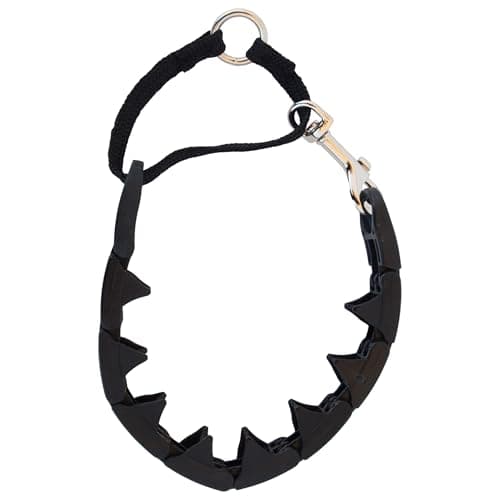
How to Choose the Best Training Collar in 2026: Complete Buying Guide
Choosing a training collar can feel confusing fast: there are humane head-turning designs, prong-style options, and remote e-collars, and the wrong pick can make training harder instead of easier. The biggest mistake buyers make is choosing by “strongest” or “cheapest” rather than matching the colla
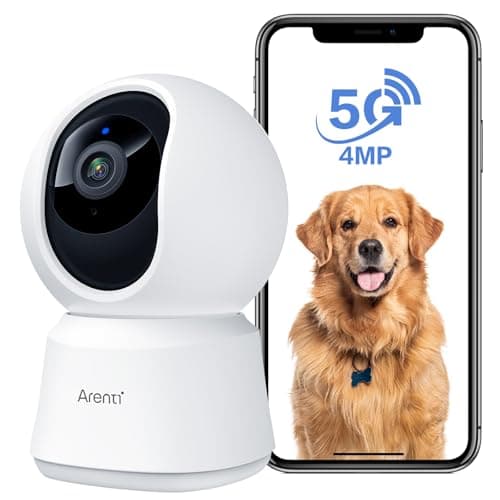
What is a Pet Tech Setup Checklist? A Complete 2026 Guide
A pet tech setup checklist is a simple planning tool that helps you choose, install, and organize the smart devices that keep tabs on your pet and home. If you’re overwhelmed by cameras, GPS trackers, smart fences, and app settings, this guide breaks the process into clear steps so you can build a s
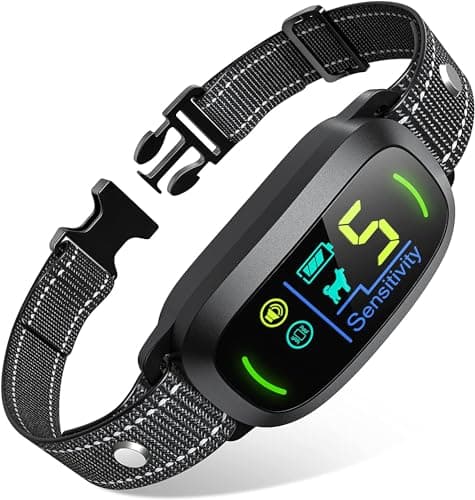
FAFAFROG Dog Bark Collar Review (2026): Specs, Pros & Cons, and Who It’s For
If you’re asking do anti bark collars work , the short answer is: sometimes, and often well enough to help reduce nuisance barking when they’re matched to the right dog and used correctly. The bigger question is which collar has the right mix of safety, sensitivity, and reliability for your dog’s si