

Scout's Take
The pick worth buying
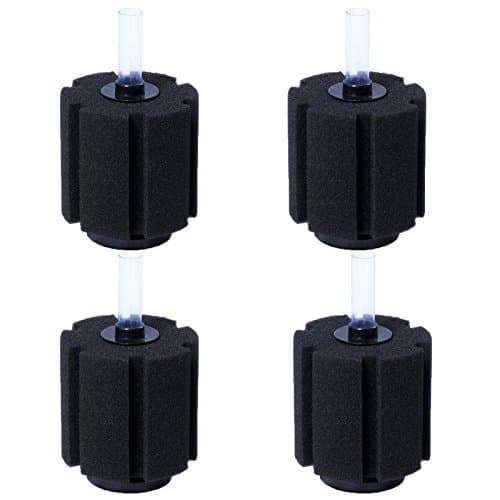
AQUANEAT Aquarium Sponge Filter Breeding Fry Betta Shrimp Nano Fish Tank 4pcs (Large up to 60Gal)
The best fit for low-flow breeding and shrimp setups thanks to simple, safe filtration and strong value.
- Gentle low-flow design
- Four filters included
- Easy maintenance
- Needs air pump
- Not ideal for heavy bioload tanks
Who this is for: Best for aquarists who need gentle, low-cost filtration for fry, shrimp, bettas, or breeding tanks.
AQUANEAT Aquarium Sponge Filter Breeding Fry Betta Shrimp Nano Fish Tank 4pcs (Large up to 60Gal) Review (2026): Specs, Pros & Cons, and Who It's For
Key Specifications
| Spec | Details |
|---|---|
| Product | AQUANEAT Aquarium Sponge Filter Breeding Fry Betta Shrimp Nano Fish Tank 4pcs (Large up to 60Gal) |
| Price | $19.98 ✓ Prime |
| Filter Type | Air-driven sponge filter with mechanical and bio filtration |
| Tank Size Claim | Up to 60 gallons |
| Dimensions | 4.5" D x 8.0" H |
| Included | 4 sponge filters |
| Best For | Fry, shrimp, bettas, guppies, killifish, dwarf cichlids, maternity tanks |
| Maintenance | Rinse and squeeze in tank water; simple airline setup |
Design & Build Quality

 Sponge filters are popular because the design is simple, dependable, and gentle. In AQUANEAT’s case, the brand positions this model as a dual-purpose biological and mechanical filter, with an air infusion chamber that creates fine bubbles to improve oxygenation. That matters because many owners choose sponge filters less for brute-force filtration and more for stable, fish-safe circulation.
The build approach is straightforward: a sponge body, an airlift chamber, and an airline connection. That simplicity is a major strength. Fewer moving parts usually means fewer failure points, and in verified owner reviews across sponge filters in this category, the most common praise is for easy maintenance and low risk to delicate livestock.
The tradeoff is that sponge filters are intentionally basic. They do not offer the polished look or compact hidden-in-the-background profile of some internal or hang-on-back filters. In a display tank, the sponge and airline are visible, so the aesthetic is utilitarian rather than sleek.
✓ Pros
- Air-driven sponge design is simple and low-risk
- Minimal current is ideal for fry, shrimp, and bettas
- Easy to rinse and squeeze clean in tank water
- Includes 4 filters, which improves overall value for multi-tank or divided setups
✗ Cons
- Visible hardware may distract in display aquariums
- Requires an air pump to function
- Bulkier than some hidden filtration options
- Best performance depends on correct tank sizing and stocking
Sponge filters are popular because the design is simple, dependable, and gentle. In AQUANEAT’s case, the brand positions this model as a dual-purpose biological and mechanical filter, with an air infusion chamber that creates fine bubbles to improve oxygenation. That matters because many owners choose sponge filters less for brute-force filtration and more for stable, fish-safe circulation.
The build approach is straightforward: a sponge body, an airlift chamber, and an airline connection. That simplicity is a major strength. Fewer moving parts usually means fewer failure points, and in verified owner reviews across sponge filters in this category, the most common praise is for easy maintenance and low risk to delicate livestock.
The tradeoff is that sponge filters are intentionally basic. They do not offer the polished look or compact hidden-in-the-background profile of some internal or hang-on-back filters. In a display tank, the sponge and airline are visible, so the aesthetic is utilitarian rather than sleek.
✓ Pros
- Air-driven sponge design is simple and low-risk
- Minimal current is ideal for fry, shrimp, and bettas
- Easy to rinse and squeeze clean in tank water
- Includes 4 filters, which improves overall value for multi-tank or divided setups
✗ Cons
- Visible hardware may distract in display aquariums
- Requires an air pump to function
- Bulkier than some hidden filtration options
- Best performance depends on correct tank sizing and stocking
Performance & Features

 The core question in this review is the one many aquarists ask: are sponge filters good enough? For the right tank, yes. Research and long-running aquarium community feedback consistently point to sponge filters as more than adequate for low-bio-load setups, breeding tanks, shrimp tanks, and species that dislike strong flow.
AQUANEAT’s own feature list highlights two practical advantages. First, the filter provides both mechanical and biological filtration, which is the main reason sponge filters can keep water clear and stable when stocked appropriately. Second, the air-driven bubbles increase oxygen exchange, which is useful in warm water, heavily planted tanks, or tanks with fish that benefit from steady surface agitation.
The “minimal current” claim is especially important. Fry and shrimp can be stressed or even pulled into stronger filters, so a sponge filter’s gentle intake is a major safety benefit. Owner feedback on similar sponge filters often centers on exactly that: they keep small livestock safe while still supporting beneficial bacteria growth.
That said, “good enough” depends on the aquarium. For a lightly stocked 10-gallon fry tank, this style of filter is usually more than sufficient. For a crowded community tank, messy cichlids, or a setup where waste production is high, a sponge filter alone may not keep pace unless you use multiple units and stay on top of water changes.
Another practical point: the tank-size claim of up to 60 gallons should be read carefully. In real-world aquarium use, sponge filters are usually sized by bioload, not just water volume. A single sponge filter can help in a larger tank, but many experienced keepers would treat this as a supplementary or low-load solution rather than a stand-alone answer for a heavily stocked 60-gallon aquarium.
✓ Pros
- Gentle flow protects fry, shrimp, and bettas
- Supports biological filtration through beneficial bacteria
- Fine bubbles can improve oxygenation
- Minimal suction risk compared with power filters
- Good choice for breeding, maternity, and quarantine tanks
✗ Cons
- Not ideal as the only filter for heavy bioload tanks
- Air pump needed for operation
- Filtration capacity depends on stocking and maintenance
- “Up to 60 gallons” may be optimistic in busy aquariums
The core question in this review is the one many aquarists ask: are sponge filters good enough? For the right tank, yes. Research and long-running aquarium community feedback consistently point to sponge filters as more than adequate for low-bio-load setups, breeding tanks, shrimp tanks, and species that dislike strong flow.
AQUANEAT’s own feature list highlights two practical advantages. First, the filter provides both mechanical and biological filtration, which is the main reason sponge filters can keep water clear and stable when stocked appropriately. Second, the air-driven bubbles increase oxygen exchange, which is useful in warm water, heavily planted tanks, or tanks with fish that benefit from steady surface agitation.
The “minimal current” claim is especially important. Fry and shrimp can be stressed or even pulled into stronger filters, so a sponge filter’s gentle intake is a major safety benefit. Owner feedback on similar sponge filters often centers on exactly that: they keep small livestock safe while still supporting beneficial bacteria growth.
That said, “good enough” depends on the aquarium. For a lightly stocked 10-gallon fry tank, this style of filter is usually more than sufficient. For a crowded community tank, messy cichlids, or a setup where waste production is high, a sponge filter alone may not keep pace unless you use multiple units and stay on top of water changes.
Another practical point: the tank-size claim of up to 60 gallons should be read carefully. In real-world aquarium use, sponge filters are usually sized by bioload, not just water volume. A single sponge filter can help in a larger tank, but many experienced keepers would treat this as a supplementary or low-load solution rather than a stand-alone answer for a heavily stocked 60-gallon aquarium.
✓ Pros
- Gentle flow protects fry, shrimp, and bettas
- Supports biological filtration through beneficial bacteria
- Fine bubbles can improve oxygenation
- Minimal suction risk compared with power filters
- Good choice for breeding, maternity, and quarantine tanks
✗ Cons
- Not ideal as the only filter for heavy bioload tanks
- Air pump needed for operation
- Filtration capacity depends on stocking and maintenance
- “Up to 60 gallons” may be optimistic in busy aquariums
Value for Money
At $19.98 for four filters, the value proposition is strong if you need multiple sponge filters or want spares on hand. That per-unit cost is attractive compared with many aquarium filtration options, especially because sponge filters are usually inexpensive to maintain over time. The value improves further if your priorities are safety, simplicity, and low maintenance. Unlike more complex filtration systems, sponge filters are easy to clean and have very few parts that wear out. Verified owner reviews in this category often praise how long sponge filters last when rinsed properly and used with routine water changes. Where value becomes less compelling is if you need high-capacity filtration in a single busy tank. In that case, you may end up buying additional air pumps, tubing, or supplemental filtration anyway. So while the price is fair, the real value depends on whether your aquarium matches the filter’s strengths. ✓ Pros - Four-pack lowers cost per filter - Low ongoing maintenance costs - Good fit for budget breeding and shrimp setups - Long-term value is strong when used in the right tank ✗ Cons - May require extra accessories like an air pump - Not a one-size-fits-all solution for larger high-waste tanks - Better value in specialized setups than in all-purpose community tanksWho Should Buy This
This AQUANEAT sponge filter makes the most sense for aquarists who want a gentle, dependable filter for small fish, fry, shrimp, or breeding setups. If you keep bettas, guppies, killifish, dwarf cichlids, or a nursery tank, the low-flow design is a major plus. It is also a smart buy for hobbyists who value easy maintenance. If you want a filter you can rinse in tank water and get back into service quickly, this style is hard to beat. Buy this if: - You need safe filtration for fry or shrimp - You run a breeding, maternity, or quarantine tank - You want simple maintenance and low suction risk - You need multiple inexpensive filters for several tanksWho Should Look Elsewhere
If you have a heavily stocked community aquarium, a messy feeder fish setup, or a tank that produces a lot of waste, you may want stronger filtration than a sponge filter alone can provide. The same goes for aquarists who want a cleaner, hidden look with less visible hardware. You should also look elsewhere if you want plug-and-play filtration without an air pump. Sponge filters are simple, but they do require a separate pump and airline setup. Look elsewhere if: - Your tank has a high bioload - You want a nearly invisible filter - You do not want to manage an air pump - You need stronger mechanical filtration for debris-heavy tanksFinal Verdict
So, are sponge filters good enough? For the right aquarium, absolutely. Based on the specs, expert aquarium guidance, and owner feedback, the AQUANEAT 4-pack is a solid, budget-friendly choice for fry, shrimp, bettas, and other small or low-waste setups. If your tank fits that profile, this is an easy recommend. If you need heavy-duty filtration for a crowded tank, skip it as a primary filter and look for a stronger system.Frequently Asked Questions
Are sponge filters good enough for a betta tank?
Yes, in most betta tanks they are. The gentle flow and low suction risk make sponge filters a common choice for bettas, especially in smaller or planted setups.
Are sponge filters good enough for fry?
Usually yes. Fry tanks are one of the best use cases for sponge filters because they provide biological filtration without pulling tiny fish into the intake.
Are sponge filters good enough for shrimp?
Yes. Shrimp keepers often prefer sponge filters because they are gentle, easy to maintain, and safer for juveniles than stronger filters.
Can a sponge filter be the only filter in a tank?
It can be, but only in the right tank. For low-bio-load aquariums and breeding tanks, a sponge filter may be enough; for heavily stocked tanks, supplemental filtration is often better.
Do sponge filters clean water as well as power filters?
Not usually in high-waste tanks. Sponge filters do a strong job with biological filtration and gentle mechanical filtration, but power filters often handle debris and larger bioloads more aggressively.
Frequently asked questions
Are sponge filters good enough for a betta tank?
Yes, in most betta tanks they are. The gentle flow and low suction risk make sponge filters a common choice for bettas, especially in smaller or planted setups.
Are sponge filters good enough for fry?
Usually yes. Fry tanks are one of the best use cases for sponge filters because they provide biological filtration without pulling tiny fish into the intake.
Are sponge filters good enough for shrimp?
Yes. Shrimp keepers often prefer sponge filters because they are gentle, easy to maintain, and safer for juveniles than stronger filters.
Can a sponge filter be the only filter in a tank?
It can be, but only in the right tank. For low-bio-load aquariums and breeding tanks, a sponge filter may be enough; for heavily stocked tanks, supplemental filtration is often better.
Do sponge filters clean water as well as power filters?
Not usually in high-waste tanks. Sponge filters do a strong job with biological filtration and gentle mechanical filtration, but power filters often handle debris and larger bioloads more aggressively.
Score breakdown
- value
- 8.7
- usability
- 8.8
- durability
- 8.1
- performance
- 8.2
- buyerFeedback
- 8.3

How Scout Picks
Specs & standards
We start from manufacturer specs and category standards.
Expert tests
We weigh independent expert and lab test results.
Verified owner reviews
We read patterns across thousands of real owners.
Scout is our illustrated guide — we research from specs, independent expert tests, and thousands of verified owner reviews. We don't lab-test products ourselves.
How we pick →Get the Full Pet Gear Buyer's Guide
Join our free newsletter — we'll send our latest Pet Gear picks, specs and verdicts straight to your inbox.
Free. No spam. Unsubscribe anytime.
Was this review helpful?
Be the first to share your feedback on this review.
Sign in to vote and let us know what you think.
Discussion (0)
No comments yet. Be the first to start the discussion.
Related Reviews
What is How to Cycle a New Tank? A Complete 2026 Guide
If you’re learning how to cycle a new tank , the biggest pain point is usually the same: fish die-offs, cloudy water, and confusing advice about when it’s “safe” to add livestock. The good news is that cycling is a straightforward biological process once you understand what’s happening in the filter
What is a Beginner Aquarium Setup Checklist? A Complete 2026 Guide
A beginner aquarium setup checklist is a simple planning tool that helps new fishkeepers gather the right tank, equipment, and supplies before adding fish. It reduces guesswork, prevents common setup mistakes, and makes it easier to create a healthy environment from day one. If you want to avoid rus
What is Aquarium Lighting Explained? A Complete 2026 Guide
If you’re trying to figure out aquarium lighting explained without getting lost in jargon, you’re probably asking the same practical question: what light do your fish and plants actually need? The short answer is that aquarium lighting is not just for looks—it affects plant growth, fish behavior, co