

Who this is for: Best for rabbit owners who need a practical, research-based habitat setup guide and product shortlist for safer, easier daily care.
What is Rabbit Habitat Setup Checklist? A Complete 2026 Guide
If you’re searching for a rabbit habitat setup checklist, you probably want a safe, clean, and comfortable space for your bunny without missing a critical step. The good news: the right setup is less about fancy accessories and more about size, airflow, flooring, litter management, and easy cleaning. This guide breaks down how rabbit habitats work, what matters most when buying, and which research-backed products are worth considering in 2026.
A rabbit habitat setup checklist is a practical guide for building an enclosure that supports a rabbit’s daily needs: space to move, a secure place to rest, and easy access to food, water, and hygiene. In general, a good habitat balances comfort for the rabbit with convenience for the owner, especially when it comes to cleaning and long-term durability. Because rabbits are active, sensitive to heat, and prone to stress, the setup you choose can affect both behavior and health.
How It Works
A rabbit habitat works by creating a controlled environment where your pet can eat, rest, hop, and stay protected from drafts, predators, and unsafe flooring. Most habitats use a combination of a sturdy frame, a solid or easy-to-clean base, ventilation openings, and access points for feeding and maintenance. The best designs also separate “living” and “cleanup” functions so waste can be removed quickly without disrupting the rabbit too much.
There are a few common habitat styles. Indoor cages and habitats prioritize easy cleaning and temperature control, while hutches may add weather protection for outdoor use. Multi-level layouts can increase usable space, but only if ramps are safe and the rabbit can move between levels comfortably. In all cases, the goal is the same: give the rabbit enough room and a predictable routine while making daily care manageable.
Key Benefits & Use Cases
Why a proper habitat setup matters
- Supports natural movement, hopping, resting, and hiding behavior.
- Makes feeding and cleaning more efficient for owners.
- Can reduce stress by giving rabbits a consistent, secure home base.
- Helps keep bedding, hay, and waste better contained.
- Improves safety by reducing exposure to gaps, unstable ramps, or poor materials.
Common use cases
Indoor rabbits: Prioritize easy cleaning, odor control, and a layout that fits your living space.
Outdoor or indoor-outdoor rabbits: Need weather resistance, secure construction, and protection from moisture and temperature swings.
Multi-pet households: Benefit from larger habitats that can be adapted for rabbits, guinea pigs, or other small pets when appropriate.
New rabbit owners: Often do best with simple, tool-light assembly and included accessories like water bottles and hay guards.
What to Look For When Buying
When you’re following a rabbit habitat setup checklist, these five criteria matter most:
1) Size and usable floor space
Look for a habitat that gives your rabbit room to stretch, turn around, and rest without feeling cramped. Bigger is usually better, especially for active rabbits or more than one small pet.
2) Cleaning design
Pull-out trays, removable tops, and wide access doors can make routine cleaning much easier. A habitat that’s simple to clean is more likely to stay sanitary long term.
3) Material quality and durability
Choose materials that resist chewing, cracking, rot, and moisture where relevant. Metal frames, thick plastic bases, and weather-resistant roofing are common durability wins.
4) Safety and comfort features
Check for stable ramps, secure latches, smooth edges, and privacy spaces. Rabbits do better when they can retreat to a sheltered area and move around without slipping.
5) Indoor vs. outdoor suitability
Not every habitat is meant for both environments. If you plan to move it outdoors, look for moisture protection, UV resistance, drainage, and materials that suit the climate.
Top Recommended Products
Below are the standout options from the product list, ranked for different rabbit habitat setup checklist needs. These are research-based recommendations drawn from manufacturer specs, feature sets, and verified owner feedback patterns—not hands-on testing.
1) 62" L Extra Large Wooden Rabbit Hutch on Wheels with Chew-Proof Ramp, Brown (Prime) — Best Overall


This is the strongest all-around pick for owners who want a larger, more complete habitat with indoor-outdoor flexibility. The 2-story layout, waterproof roof, locking rollers, and anti-chew ramp make it especially appealing if you want a more permanent rabbit home with easier mobility.
- ✓ 9.58 ft² total space with separate rest and play zones
- ✓ 360° rollers with brakes for easier repositioning
- ✓ Waterproof asphalt roof for weather protection
- ✓ Anti-chew, slip-proof ramp for safer access between levels
- ✓ Three pull-out trays help streamline cleaning
- ✗ Larger footprint may be too bulky for smaller rooms
- ✗ Wood can require more care than plastic for long-term upkeep
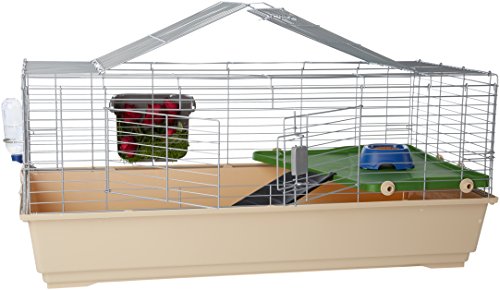
2) Amazon Basics Top Access Small Animal Habitat for Rabbit, Guinea Pig, Ferret & Chinchilla with Accessories, Jumbo, 48.6"L x 26.6"W x 20.6"H, Multicolor

This habitat is a strong choice for people who want a roomy, accessory-included setup that’s easy to access from the top and front. Its large footprint, included hay guard, water bottle, and privacy space make it a practical option for a rabbit habitat setup checklist focused on convenience.
- ✓ Jumbo size with wide access openings
- ✓ Includes water bottle, hay guard, ramp, and food dish
- ✓ Hide-away privacy area under the balcony
- ✓ No-tools assembly is beginner-friendly
- ✓ Metal wire upper frame with plastic base for durability
- ✗ Not recommended for long-term outdoor use in low temperatures
- ✗ Multi-pet design may still need extra enrichment for rabbits
3) Plastic Rabbit Hutch for Indoor & Outdoor


If your checklist prioritizes easy cleaning and low-maintenance materials, this plastic hutch stands out. The pull-out tray, detachable roof, and thickened PE panels make it a solid fit for owners who want a simpler indoor or sheltered outdoor setup.
- ✓ Thickened PE plastic panels resist cracking and rot
- ✓ Pull-out tray and bottom grid simplify cleaning
- ✓ Detachable roof improves access for maintenance
- ✓ Tool-free assembly is beginner-friendly
- ✓ Indoor and outdoor use adds flexibility
- ✗ Smaller size may be limiting for larger rabbits
- ✗ Less spacious than the larger habitat options in this roundup
Common Mistakes to Avoid
- Choosing a habitat that’s too small. Rabbits need enough room to move and rest comfortably, not just stand inside.
- Ignoring cleaning access. If the tray, roof, or doors are awkward, maintenance becomes a chore and cleanliness suffers.
- Using unsafe ramps or levels. Steep, slippery, or chew-prone ramps can create injury risks.
- Mixing indoor and outdoor use without checking materials. Some habitats are not meant for cold, wet, or prolonged outdoor exposure.
- Forgetting privacy and enrichment. Rabbits need a hideaway area and a calm space to reduce stress.
- Assuming accessories replace space. A water bottle and hay guard are helpful, but they don’t make up for cramped floor area.
Frequently Asked Questions
What is included in a rabbit habitat setup checklist?
A rabbit habitat setup checklist usually includes size, flooring, bedding, food and water stations, a litter or waste plan, hiding space, ventilation, and easy cleaning access. Many owners also add ramps, hay storage, and enrichment items.
How big should a rabbit habitat be?
There isn’t one universal size, but bigger is generally better. The key is to provide enough room for your rabbit to stretch out, hop, and turn comfortably without feeling confined.
Are indoor rabbit habitats better than outdoor hutches?
Indoor habitats are often easier to keep clean and temperature-controlled. Outdoor hutches can work if they’re weather-resistant, secure, and appropriate for your climate, but they usually require more attention to protection from heat, cold, and moisture.
What features make a rabbit habitat easier to clean?
Pull-out trays, removable tops, wide doors, and simple surfaces make cleaning much easier. Habitats with separate waste zones or easy-access panels are usually more practical for daily care.
Do rabbits need multi-level habitats?
Not always. Multi-level habitats can add usable space, but only if the ramps are safe and easy for the rabbit to use. For many owners, a large single-level setup is simpler and less risky.
Pros
- Large, usable floor space
- Easy-clean designs with pull-out trays or wide access
- Useful accessories included on some models
- Indoor/outdoor flexibility on select picks
- Prime options available
Cons
- Some models are bulky
- A few are not ideal for cold outdoor use
- Smaller hutches may feel cramped for larger rabbits
Frequently asked questions
What is included in a rabbit habitat setup checklist?
A rabbit habitat setup checklist usually includes size, flooring, bedding, food and water stations, a litter or waste plan, hiding space, ventilation, and easy cleaning access. Many owners also add ramps, hay storage, and enrichment items.
How big should a rabbit habitat be?
There isn’t one universal size, but bigger is generally better. The key is to provide enough room for your rabbit to stretch out, hop, and turn comfortably without feeling confined.
Are indoor rabbit habitats better than outdoor hutches?
Indoor habitats are often easier to keep clean and temperature-controlled. Outdoor hutches can work if they’re weather-resistant, secure, and appropriate for your climate, but they usually require more attention to protection from heat, cold, and moisture.
What features make a rabbit habitat easier to clean?
Pull-out trays, removable tops, wide doors, and simple surfaces make cleaning much easier. Habitats with separate waste zones or easy-access panels are usually more practical for daily care.
Do rabbits need multi-level habitats?
Not always. Multi-level habitats can add usable space, but only if the ramps are safe and easy for the rabbit to use. For many owners, a large single-level setup is simpler and less risky.

How Scout Picks
Specs & standards
We start from manufacturer specs and category standards.
Expert tests
We weigh independent expert and lab test results.
Verified owner reviews
We read patterns across thousands of real owners.
Scout is our illustrated guide — we research from specs, independent expert tests, and thousands of verified owner reviews. We don't lab-test products ourselves.
How we pick →Get the Full Pet Gear Buyer's Guide
Join our free newsletter — we'll send our latest Pet Gear picks, specs and verdicts straight to your inbox.
Free. No spam. Unsubscribe anytime.
Was this review helpful?
Be the first to share your feedback on this review.
Sign in to vote and let us know what you think.
Discussion (0)
No comments yet. Be the first to start the discussion.
Related Reviews

How to Choose the Best Reptile Substrate in 2026: Complete Buying Guide
If you’re trying to figure out how to choose reptile substrate , the challenge is usually the same: too many materials, too many species-specific opinions, and not enough clear guidance. Pick the wrong substrate and you can end up with poor humidity, messy spot-cleaning, or a setup that doesn’t supp

Maxdee Massage Stones Essential Hot Stones for Massage Review (2026): Specs, Pros & Cons, and Who It's For
Check Price on Amazon →

What is Reptile Heating and Lighting Explained? A Complete 2026 Guide
Reptile heating and lighting can feel confusing fast: do you need heat, UVB, UVA, a basking bulb, a ceramic emitter, or all of the above? If you’re trying to keep a reptile healthy without overbuying the wrong gear, this guide breaks the basics down in plain English. You’ll learn how reptile heating